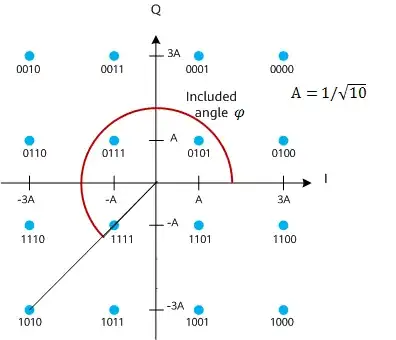
This is a follow up from this previous question discussing why QAM encoding is spaced in a grid like pattern like this one:
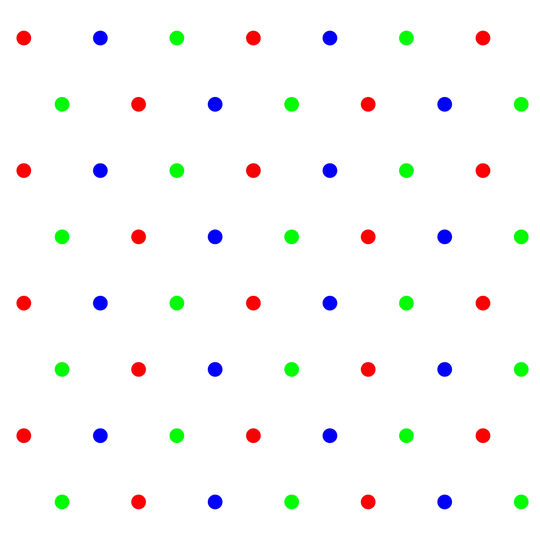
versus another with more efficient packing:
After looking at @Attie and @MarcusMüller's awesome answers and rewatching the video I have a leading idea that may explain a grid based QAM.
Question:
If the broadcasted signal is the result of 2 waves' constructive and destructive interference and only each wave's amplitude is modulated... could it be a quantization issue?
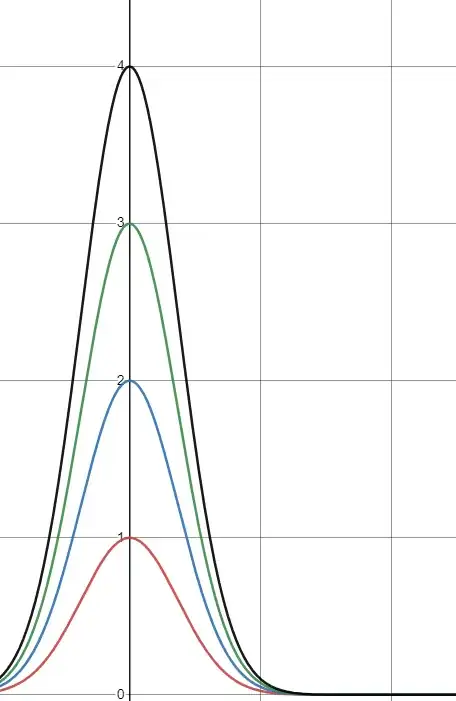
To clarify: I imagine we don't have a broadcasting device that has a perfectly continuous output and therefore can't output unlimited resolution for these signals. If that is the case, a combination of 2 discrete amplitudes would always result in a grid like pattern:
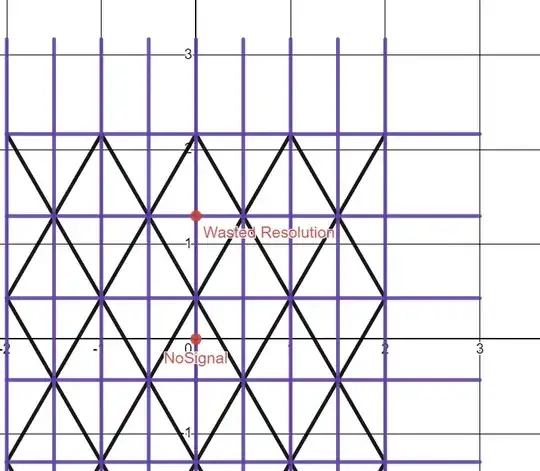
So an equilateral or irregular symbol distribution would sacrifice a discrete step in order to conform to the non-grid standard. Example created in Desmos:
Each purple line represents a discrete amplitude a broadcast device could reliably and accurately achieve. The example should show that the purple grid interests at points the equilateral distribution does not, yet the same resolution is required for both schemes.