There are indeed multiple methods.
Query Store
Since you have SQL Server 2016, may I recommend Query Store? You can enable it per database from the "properties" menu in SSMS, or by running something similar to the following script:
USE [master]
GO
ALTER DATABASE [TestDB] SET QUERY_STORE = ON
GO
ALTER DATABASE [TestDB] SET QUERY_STORE (OPERATION_MODE = READ_WRITE, QUERY_CAPTURE_MODE = AUTO)
GO
Once it is turned on, you can look at query performance details.
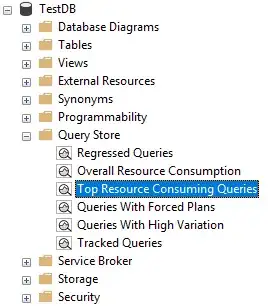
Gotchas: Fair warning - turning on Query Store will clear the plan cache! Query Store, as a newer feature, can have some quirks. I've run across several myself. As far as performance, I see it used in environments with 20k batches/sec and only a couple of percent CPU overhead.
DMVs
Another option is to use the dmvs. The one you are looking for in this case is sys.dm_exec_query_stats, specifically the "elapsed_time" columns. Here's a query to look at recent long-duration queries.
SELECT TOP 50
st.text,
SUBSTRING(st.text, (qs.statement_start_offset/2) + 1,
    ((CASE statement_end_offset
        WHEN -1 THEN DATALENGTH(st.text)
        ELSE qs.statement_end_offset
    END - qs.statement_start_offset)/2) + 1
) AS statement_text,
qp.query_plan,
qs.execution_count,
qs.last_execution_time,
qs.last_worker_time/1000000.0 AS last_worker_time_s, --this is CPU time
qs.last_elapsed_time/1000000.0 AS last_elapsed_time_s --this is clock time
FROM sys.dm_exec_query_stats qs
CROSS APPLY sys.dm_exec_sql_text(qs.sql_handle) st
CROSS APPLY sys.dm_exec_query_plan(qs.plan_handle) qp
WHERE last_execution_time > DATEADD(minute,-5,GETDATE()) --last 5 minutes
ORDER BY qs.last_elapsed_time DESC
Gotchas to be mindful of with this dmv are that it doesn't capture RECOMPILE queries, and it doesn't capture canceled queries (which is what happens with a query timeout from the application).
SSMS
Finally, if you know the exact query, you can run it in SSMS and look at the actual execution plan. Highlight the select, and look at the properties window on the right. You'll see extremely helpful information about CPU and duration (in milliseconds). Similar information exists for the operators as well.
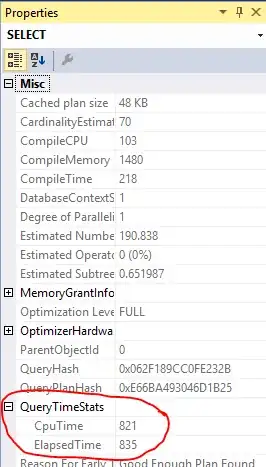
Gotchas with this method include the fact that queries submitted through SSMS do not necessarily reflect what happens with application queries. Canonical link here.
In short, I highly recommend Query Store.


