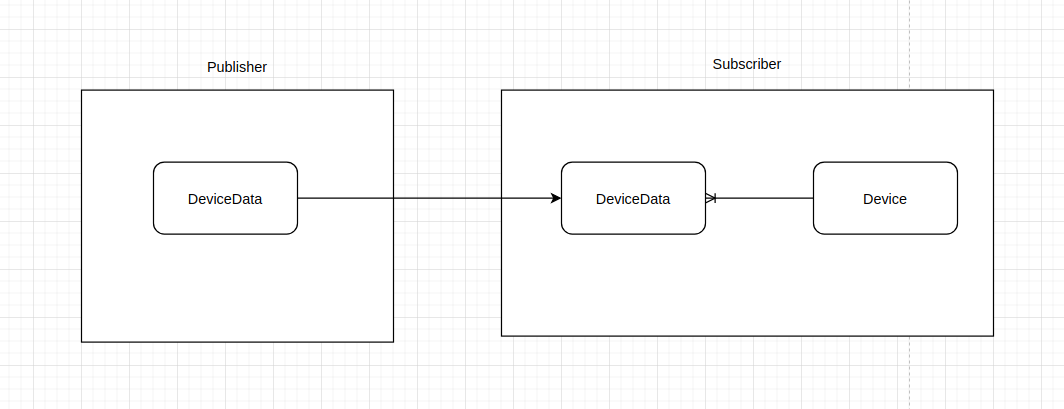
Using MS SQL Server to replicate data between 2 servers for security purposes. Is it possible to perform an operation on the data sent from the publisher database before it is inserted into the subscriber table?
I have a table (lets call it DeviceData) that has a column DeviceName on the publisher. DeviceData is being subscribed to on the subscriber database, however I need DeviceData to have a foreign key on it referencing a table Device. Is there anyway to check what data is not in table Device in column DeviceName and insert it into Device before it is inserted into DeviceData?
Here is a visual example I drew: