I was looking at some `worktable' from the query below by my friend Martin
SELECT st.session_id
        ,at.*,
 case transaction_type
      when 1 then 'Read/Write'
      when 2 then 'Read-Only'
      when 3 then 'System'
      when 4 then 'Distributed'
      else 'Unknown - ' + convert(varchar(20), transaction_type)
 end as tranType,
 case transaction_state
      when 0 then 'Uninitialized'
      when 1 then 'Not Yet Started'
      when 2 then 'Active'
      when 3 then 'Ended (Read-Only)'
      when 4 then 'Committing'
      when 5 then 'Prepared'
      when 6 then 'Committed'
      when 7 then 'Rolling Back'
      when 8 then 'Rolled Back'
      else 'Unknown - ' + convert(varchar(20), transaction_state)
 end as tranState,
 case dtc_state
      when 0 then NULL
      when 1 then 'Active'
      when 2 then 'Prepared'
      when 3 then 'Committed'
      when 4 then 'Aborted'
      when 5 then 'Recovered'
      else 'Unknown - ' + convert(varchar(20), dtc_state)
 end as dtcState
FROM    sys.dm_tran_active_transactions at
  left JOIN sys.dm_tran_session_transactions st ON st.transaction_id = at.transaction_id
ORDER BY at.transaction_begin_time
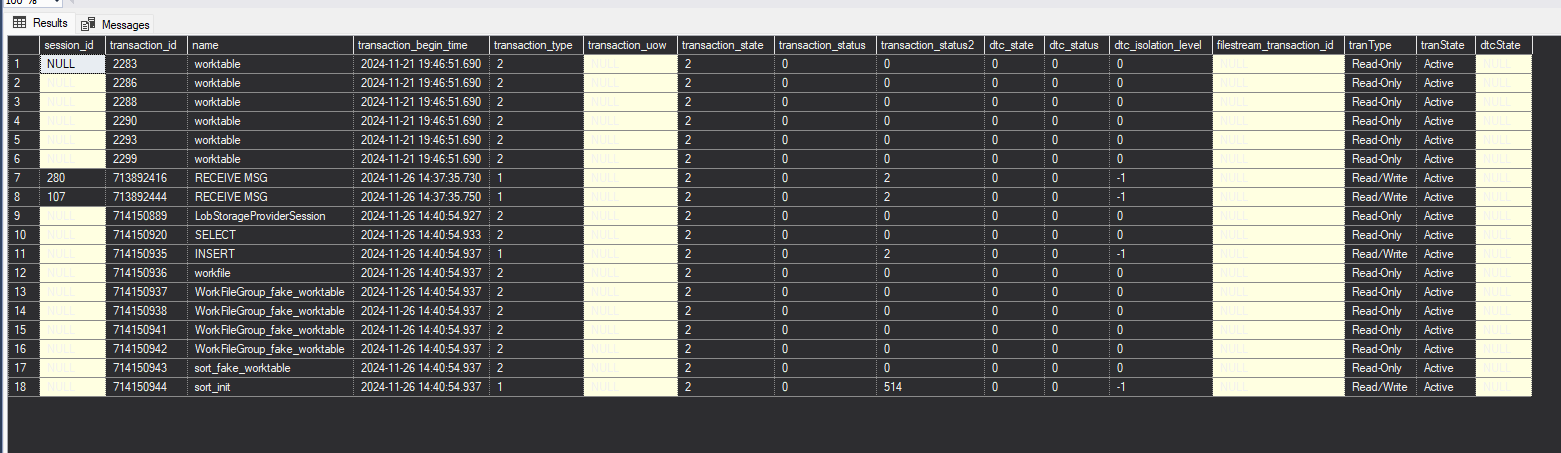
one thing that called my attention is the fact that these transactions don't have a corresponding session?
how can I find out where they are coming from?
There is no session associated with them.


