We are currently thinking about a target architecture for a geographically distributed application.
This application tracks and schedules the movements of all material units across various production sites.
There will be two logical entities:
- The first one is responsible of the operational/local management of a specific store - there are as many instances of this entity as there are stores
- The second one is responsible of the global management (for example: units transfers between stores) and therefore communicates with all operational/local entities
Here is the logical diagram of the application:
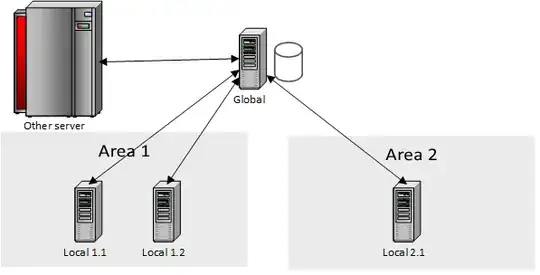
The implementation of this application cannot be directly derived from the previous diagram because we have to take into account the following constraints:
- Stores are located in different areas (typically a few stores per area) and if the area is temporarily isolated from the global network, the system should still be functional for a limited amount of time.
- The operational entity requires the global entity to work
Therefore, I thought about a new architecture where we would create identical instances of the global entity (same executables) with synchronized databases for each area:
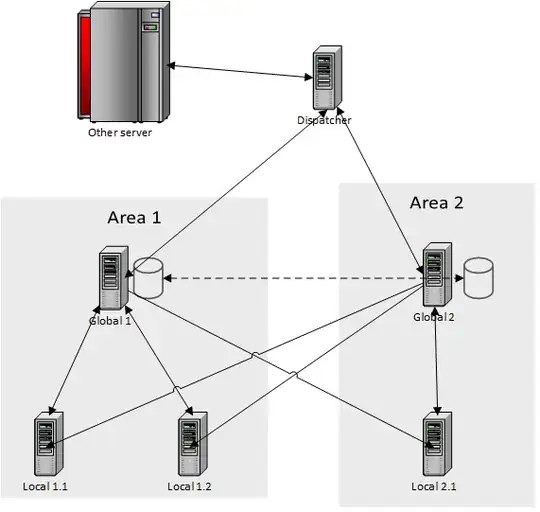
I was wondering if anyone already used SQL Server replication to achieve the same kind of goal.
Is it the right way to proceed ? All recommendations/warnings are welcome !
Thanks a lot, Sébastien.


