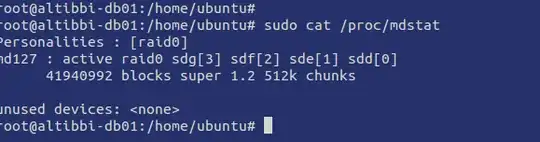
Firstly: unless this is a replication slave, development box, or similar, that can easily be reconstructed from other sources should the worst happen, RAID0 is not recommended. It provides good performance but potentially seriously bad reliability: if any one of your four drives fails then the whole array is toast.
Edit after new information: it would appear from a quick search that people do recommend RAID0 on Azure, on the assumption that the underlying (virtual) disks are reliable due to the redundancy in the platform. I'm not convinced this is a good idea, though I've not used the platform so might not be the best person to comment there.
Secondly: without knowing anything at all about your data size, basic data structure (for the parts being tested in your benchmarks), read/write load patterns, other details of server's specification (RAM, CPU, ...), your mySQL configuration (out of the box or some tweaks done?) (if out of the box, which box?), how you are testing performance to show it is the same, and so on, we can't really help you on the performance front at all.
The only general thing we can say is if your performance is being limited mainly by CPU resource then RAID is not going to make any difference because that only affects IO performance.
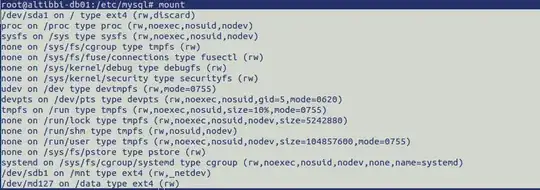
Thirdly: you don't show if that RAID volume is mounted anywhere as a file system or part of an LVM arrangement. Have you done this and told mySQL to store data on that array?