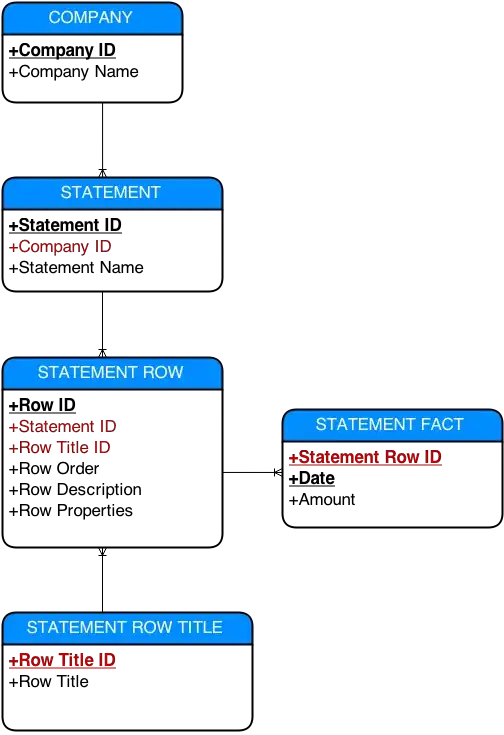
IMO, the balance sheet, income statement and cash flow tables can be the same. Here's my take on it:
-- Companies
CREATE TABLE company (
    [id]      int NOT NULL PRIMARY KEY,
    [name]    varchar(255) NOT NULL
);

-- "Balance sheet", "IFRS Income statement", etc
CREATE TABLE statement (
    [id]      int NOT NULL PRIMARY KEY,
    [name]    varchar(255) NOT NULL
);

--- "Tangible assets", "Outstanding stock", etc
CREATE TABLE statementRow (
    [id]      int NOT NULL PRIMARY KEY,
    statementId int NOT NULL,
    rowOrder  int NOT NULL,
    rowTitle  varchar(255) NOT NULL,
    rowDescription varchar(max) NULL,
    rowProperties varchar(max) NULL,
    FOREIGN KEY (statementId) REFERENCES statement ([id])
);

--- The facts
CREATE TABLE statementFact (
    companyId      int NOT NULL,
    statementRowId int NOT NULL,
    [date]         date NOT NULL,
    amount         numeric NULL,
    PRIMARY KEY ([date], statementRow),
    FOREIGN KEY (companyId) REFERENCES company ([id]),
    FOREIGN KEY (statementRowId) REFERENCES statementRow ([id])
);
Advantages of this model:
- You can have different types of balance sheets, income statements, etc, in order to cover future reporting needs
- The model defines the ordering of the rows for each statement (don't rely in an identity column for that, because you won't be able to insert rows later on)
- Using "date" instead of "year" allows you to publish statements more than once per year, i.e. per quarter or month, or even ad-hoc.
- The rowProperties field allows you to add information like if the row should be boldface, italics or other formatting properties.
- Optionally, you may want to move "companyId" from statementFact to "statement" if certain reports only apply to certain companies.