7

When my dad saw I was stripping the insulation off thin tinned copper wire using my teeth he said that this was dangerous because parts of my teeth could break off. I can't believe this because it's generally said that teeth are really strong.

Is there any evidence or research in this area? I couldn't find anything about this on the internet. Did you experience this or have heard of someone else experiencing this?

timakro
  • 187
  • 3
  • 6
    O_O maybe you should ask a dentist about this. We are just engineers – Mitu Raj Dec 23 '17 at 15:13
  • 4
    I'm voting to close this question as off-topic because this has nothing to do with electronic engineering... – Tom Carpenter Dec 23 '17 at 15:23
  • 2
    We're engineers here, we normally use the proper tools for a specific job. On rare occasions (no proper tool available) I would use a kitchen knife to strip a wire but never my teeth. Do you also open beer bottles with your teeth? – Bimpelrekkie Dec 23 '17 at 15:56
  • 6
    "Did you experience this" - yes, I used to strip wire with my teeth until I chipped one. Don't do it! – Bruce Abbott Dec 23 '17 at 18:01
  • I broke my tooth biting down on a fork one time. A) Jaw muscles are quite strong. B) The hardness is only one thing that's important, the angle and position of the foreign object and the angle of bite, etc. are also significant factors. I wouldn't do it. I stripped wire with a spoon before, so there are many other good options that are much less expensive to replace. – Todd Wilcox Dec 23 '17 at 22:09
  • To those voting to close this as off-topic: I want to remind everyone that this site is not "for professionals only", so it must cope with questions from beginners and hackers. This is a common (mis-)practice and raises safety concerns (and work safety is on-topic here). Although a dentist could answer the medical part of "don't abuse your teeth", he wouldn't be able to understand the whole scope of the abuse (unless it were an EE hobbists himself). Voting to reopen. – LorenzoDonati4Ukraine-OnStrike Dec 25 '17 at 10:04
  • 1
    @Bimpelrekkie "We're engineers here", sorry, I disagree. Yes, most high-rep users are engineers, but this site is not aimed at engineers (or engineering students) only. Hackers and hobbyists are still welcome here. This is not (yet?) a "We are engineers" site, is a "We dearly love electrical engineering" site. – LorenzoDonati4Ukraine-OnStrike Dec 25 '17 at 10:09
  • I tried this while I was a student on telephone wire, I stopped because it was taking the enamel my teeth, I wouldn't recommend it – Voltage Spike Dec 25 '17 at 21:56

4 Answers4

16

I have to admit.. I'm guilty as charged.

My old teeth can't handle it now, but in my younger days, with the right kind of wire, my teeth did come in handy as a quick pair or strippers. Especially when I needed a third hard to use the stripper. Obviously, that does involve wear on your teeth or worse. Fortunately I never had any breakage. Of course I'm originally from the UK, where dental care has an entirely different meaning.

The type of wire matters though. Don't try it with heavy gauge household wire, that insulation is way too tough to get through. Also, stripping multi-stranded wire you are about to solder is not a good idea, you tend to contaminate the wires with your saliva, and the wires will not bond right.

Of course, using the right tool for the job is much better than using your teeth.

Having said that, finding the right wire stripper can also be a challenge. You can spend a lot of frustrated time with a pair that doesn't strip but just peals a layer off the plastic, or carves a groove in the wire, or actually cuts the wire or some strands. The latter is particularly annoying if you are trying to strip the ends of multiple wires in a multi-core cable.

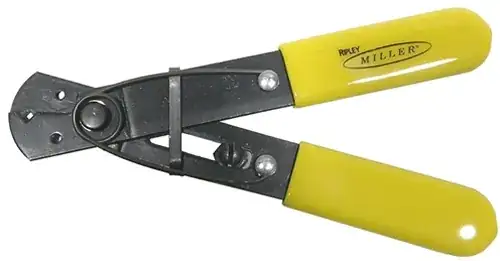
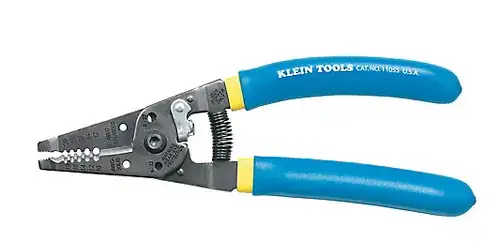
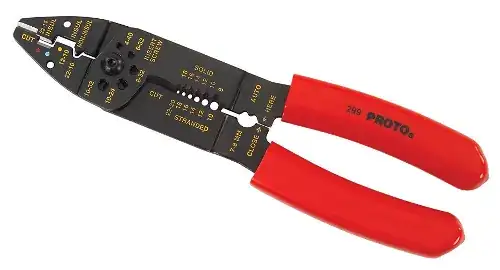
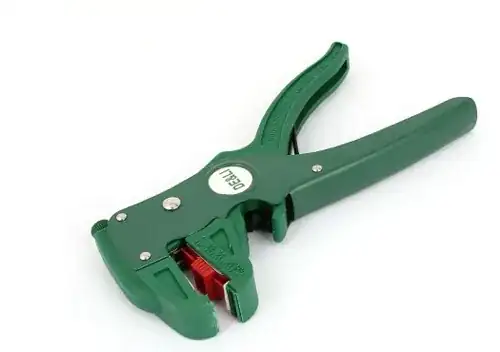
Wire strippers seem to fall into the "mouse-trap" category. They never quite work right and someone is always inventing a "better" one. Here are a few typical and common examples.

enter image description here

Wire cutter! These are actually ok if you have a number of wires to do and take the time to use a drill bit as a gauge to set the adjustment slider screw.

enter image description here

Works ok if you know the wire gauge and there is a hole that fits. Otherwise you end up going a size smaller and damaging the wire.

enter image description here

Again, with the right gauge this works, but having the stripper on the handle side makes them clumsy to use. The cutter at the end also never seems to work right.

enter image description here

Cheap pressure mode stripper. Mine worked great at the start, now it pretends to grip then releases when you pull the trigger... junk.
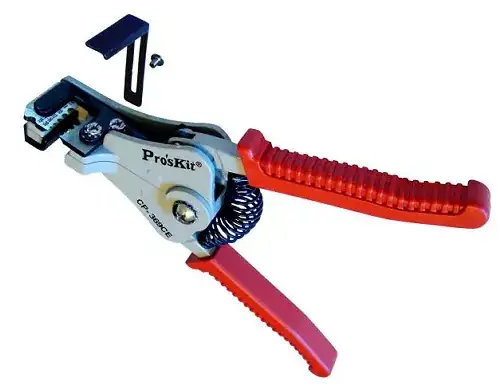

enter image description here

Commercial grade. Works great if the gauge is right. Note the adjustable strip length attachment. They are heavy and expensive.


All of those bar the last two make you pull on the wire while you strip, which can be problematic with thinner wires.


Of all the hand tools in your electronic kit, the humble stripper is one that is worth investing a little more money on. I have a few pairs that live in the bottom of my toolbox that failed to make the grade.

Trevor_G
  • 46,675
  • 8
  • 72
  • 154
  • 1
    Nice listing of low-end strippers. For situations where nicks are unacceptable there are abrasive and chemical strippers, as well as rotary blades which are good if set up properly. – Spehro Pefhany Dec 23 '17 at 18:14
  • 1
    @SpehroPefhany yup, like I said, someone is always coming up with a different way to do it. – Trevor_G Dec 23 '17 at 18:16
  • 1
    The last two pressure strippers are fantastic when they work, compared to the hole-and-pull variety. – pjc50 Dec 23 '17 at 21:14
  • 1
    "Wire strippers seem to fall into the "mouse-trap" category. They never quite work right " (+1) Great statement! It condenses my decades-long experience with various such tools! Never found a general tool that worked well with all gauges used in electrical-electronics work. The best universal tool, IMO, is a firm hand and a good pair of electricians scissors, but it requires practice and it's a PITA if you have to strip lots of identical wires (in that case a dedicated tool is better). – LorenzoDonati4Ukraine-OnStrike Dec 25 '17 at 10:31
15

Cost of cheap stripper:$5

Cost of crown $1000

Not a great idea though many of us have gotten away with it. In my case I had a bunch of plain copper solid-core telephone wire with polyethylene insulation that stripped very easily (also melted back very easily when soldering). But I've also required dental work from hitting a pit in a dried fruit so I would not advise it. Even if you are not paying directly for it, it's never as good as the original equipment.

Older wire you find around may not be RoHS and may contain lead in the tinning or if the end has been soldered with PbSn solder.

Spehro Pefhany
  • 397,265
  • 22
  • 337
  • 893
  • 1
    @timakro Lead gets an overdue amount of bad rep. – Trevor_G Dec 23 '17 at 18:19
  • 2
    @Trevor Lead in soldering alloy has a bad rep because people misunderstand its mechanism of action as a dangerous poison. Metallic lead is unlikey to cause harm if not ingested. Normal usage of leaded soldering alloy is not particularly dangerous, if you wash your hands and don't pollute your food with remnants of the soldering process. Putting in your mouth something that could have lead in its composition, is dangerous, especially if it is a consolidated practice. Lead poisoning acts by accumulation. The body cannot naturally get rid of it. – LorenzoDonati4Ukraine-OnStrike Dec 25 '17 at 10:34
  • 1
    @LorenzoDonati that's what I was eluding to. Even injected it's a long slow process. Mind you reading that link would scare the willies out of anybody. But when you take into consideration once upon a time, not that long ago, lead water piping was the norm... and with the deluge of other crap we get exposed to every day, especially the flux in the solder, it's not so bad. Not that care should not be taken to avoid or limit it's use and appropriate measures be taken when you need to. – Trevor_G Dec 25 '17 at 13:04
  • @LorenzoDonati but then aqain.. that could be the lead talking – Trevor_G Dec 25 '17 at 14:03
5

I’ve been doing it for decades and it hasn’t done my teeth any harm. The tin might contain a trace of lead to prevent whiskers however.

Robert Endl
  • 2,207
  • 12
  • 12
0

I can assure you that the enamel of your teeth is not as strong as metal. And since just chewing organic materials wears teeth over the years, stripping wire will do the same.

Check this slide package out, Tooth wear and its types

Richard Chambers
  • 247
  • 1
  • 7
  • 19
  • 1
    organic material is acidic. – Passerby Dec 23 '17 at 17:36
  • 1
    "the enamel of your teeth is not as strong as metal" that's kind of the point though, it's really hard to nick the metal with your teeth. Now if someone would come up with a pair of strippers with similar qualities rather than sharp tool steel... – Trevor_G Dec 23 '17 at 18:30