This type of device is called a turbine, and the word turbine can also describe just the blade arrangement that converts fluid pressure into rotational motion. A set of stationary blades that rotate a fluid(air or water) are called a spinner and the moving blades of a water turbine are generally called the runner.
Currently there are not a tremendous number of small cheap turbines on the market due to limited demand. There are startups for a backpack wind turbine, wind/water turbine and water turbine going right now and that's about it if you want a purpose built product. If you want your own, you can repurpose a fan with a permanent magnet DC motor, but that would be hard to waterproof. If you want something small, you could look at brushless RC motors, and look for the lowest kV rating you can find. The lower the kV rating, the more power you can generate at the same RPM.
As far as waterproofing, having the blades separate from the motor allows you to either seal the motor shaft or use a magnetic linkage for waterproofing. If you go with a blade design that will result in extreme torque shifts from wind gusts, a magnetic linkage makes a nice shock absorber and can offer you the most absolute form of weatherproofing, but I would suggest for the moment discarding the idea of making it waterproof and just finding any fan you can start playing around with(it just needs the right type of brushless motor in it).
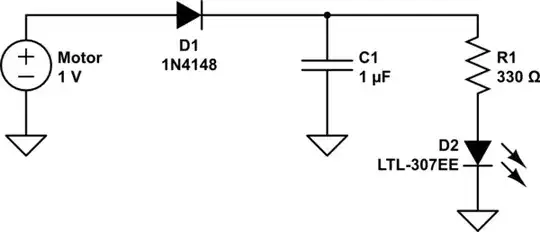
The joule thief circuit shown in your video is simple and cheap to build. The parts he shows are a transistor, a transformer(shared core inductor) and a resistor, so if you search each of those things and "joule thief" you should learn everything you need. The joule thief with an LED is a good beginner circuit because it is automatically switching efficient(the transistor tends to be hard on or hard off so switching losses are negligible) and it lets you ignore the input voltage requirements of the LED. You may also need to look up each other word you don't understand as you find them.
The one other thing shown is a high power LED on a MCPCB, and if you acquire yourself one of these, due to the built-on heatsink, they are extra tough in terms of the power level you can feed them. Because it's hard to put an absolute limit on what a turbine might generate without knowing a tremendous amount of university level math or doing extensive testing, you're much less likely to fry one of these due to a gust of wind. IIRC the joule thief just uses whatever power you feed into it based on the resistor you choose, so it's great for getting an LED to turn on even if the source voltage is lower than the LED voltage, but if you really get a wind turbine going (try putting a windsock on a small fan) a high power LED will handle the surge better than a low power one.