4

I have four batteries (18650) 3.7 V each, and I want to connect them in series to get around 15 V. Can I do that without having a BMS? Just directly connecting them together?

Note: I do have a charger specifically to charge this type of batteries, so if your answer is "BMS is better for safe charging" please don't, charging isn't my concern.

ocrdu
  • 9,195
  • 22
  • 32
  • 42
  • 1
    What happens when the first of your series cells goes flat? – Transistor Jul 18 '20 at 15:02
  • For a while yes. At some point the capacitances of the individual batteries will drift apart and the lowest one will experience worse and worse overcharge and undervoltage each cycle until something gives. Fiery explosion? Slow gradual performance loss? – winny Jul 18 '20 at 20:13

2 Answers2

2

Bms is(should) also protecting from over discharge and cell voltage reversion. Discharging cell to 0v maybe not start a fire but will render it useless.

zajc3w
  • 344
  • 1
  • 4
1

It depends on chemistry. For example the Sony Konion doesn't need the BMS at all costs. It's a LiMn chemistry (IMR) also used in Samsung INR battery. Usually you will find those batteries in hand held tools battery packs, Makita does use Sony Konion with overvoltage and short circuit protection, no voltage measurement over each cell and BMS is done in their battery packs.

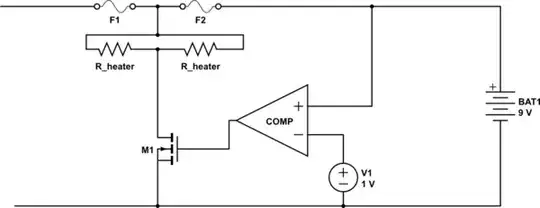
Simplified Makita Protection circuit:
schematic

simulate this circuit – Schematic created using CircuitLab

In case of overcurrent or short circuit the fuses F1 or F2 will blow. In case of overvoltage the comparator turns on the MOSFET which turns on the heating elements and starts to melt the fuse until the battery pack is disconnected from charger, preventing the eplosion of the battery.

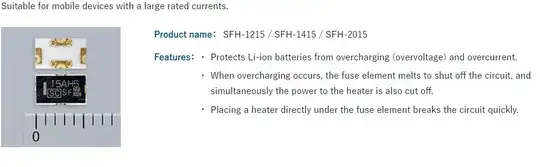
The protector fuse and heating element link
enter image description here

winny
  • 14,707
  • 6
  • 46
  • 66
Marko Buršič
  • 23,961
  • 2
  • 20
  • 33