On the United States Radio frequency allocation chart, the term "fixed" radio comes up a lot. What does that mean? Who is allowed to used "fixed"?
Asked
Active
Viewed 6,846 times

3 Answers
5
Generally we distinguish two types of stations:
- Mobile, when the device is portable
- Fixed, when the device stays on one location
See Amateur Radio Stations for more information:
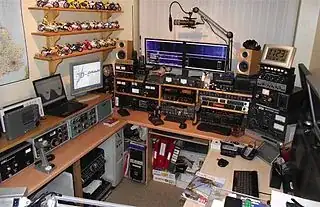
(left: fixed; right: mobile)


4
Fixed wireless is normally used as a term for radio communications between fixed locations such as buildings that don't move as opposed to mobile communications. One reason the allocations are treated differently is that for a fixed location it's often possible to allocate the same frequency to different regions.
For example for a given installation it may be determined for a specific frequency / power range that interference is only likely within a 10km radius, giving the possibility that the same frequency may be used hundreds of times by different users within a country as long as they are geographically far enough apart. That assumption of course can't be made for mobile communications systems that move around.
License costs are normally a combination of power and bandwidth and how far the signals are likely to emanate and also population density. I can only only speak from an Australian perspective but I believe here anyone is allowed to use fixed frequencies if you pay the license fee and it is approved. That may range from hundreds of dollars per year for a narrowband low-power license (for example courier voice communications over a limited area) and into millions for the sort of allocation you'd need for TV broadcasting over a large area.

PeterJ
- 17,201
- 37
- 57
- 91
1
http://www.ntia.doc.gov/files/ntia/publications/2003-allochrt.pdf ? (That is one ugly chart.)
Opposite of "mobile": the transmitter is at a fixed location. Why are there different rules for fixed and mobile? Because an interference problem caused by a mobile transmitter is a lot harder to track down.

pjc50
- 46,725
- 4
- 65
- 126
-
It's better then Europe's!!! So who gets privileges to use fixed? – skyler May 30 '13 at 12:54
-
Exact regulation depends on the band, but there's a set of bands allocated for amateur ("ham") radio, and a training and certification process to be allowed to broadcast on them. Amateur radio is very much a community of its own. – pjc50 May 30 '13 at 13:09