3

I'm working with some flexures (circularly symmetric tube with pins at the ends). Their bending stiffness matches my FEA. However, I'm concerned that they are buckling, reducing their overall axial stiffness.

I don't have a way to measure the axial stiffness in situ; the flexures are part of a larger system.

I don't have a lot of mechanical measurement equipment either, but I do have:

  • Accelerometer
  • Laser distance measurement device
  • Oscilloscope
  • Masses, scales, ...

I can model the buckling, but the rest of the team relies on measurement and doesn't believe models. So, I need to come up with a method of measuring buckling of the flexure in compression.

Ideas?
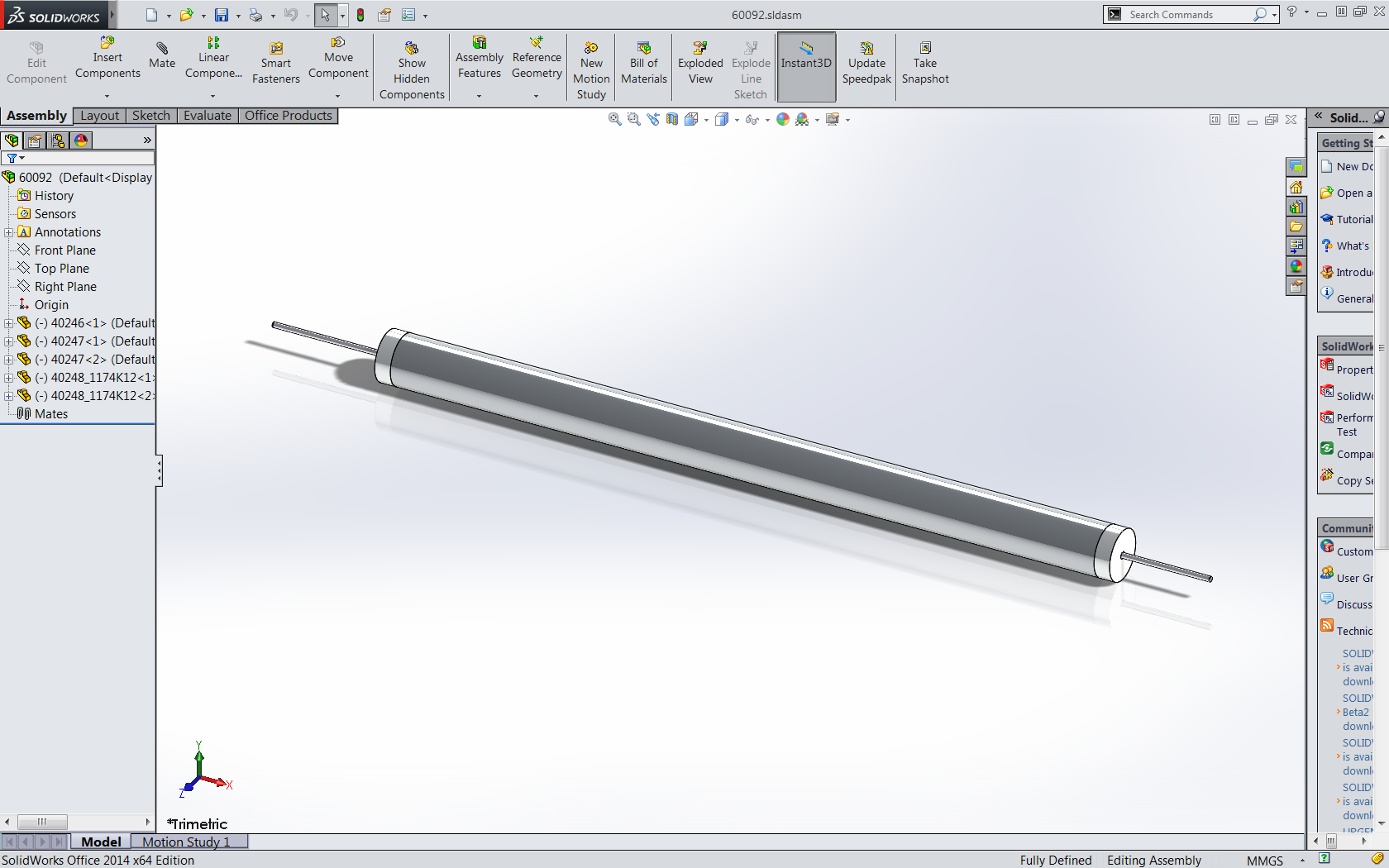
enter image description here

user3533030
  • 163
  • 5

1 Answers1

2

In principle the axial load in an element is related to its natural frequency. Think of it like a guitar string - increasing the tension in the string raises the pitch (frequency).

It may be possible to attach an accelerometer and then strike the element with a hammer to get it vibrating and measure the natural frequency (or even measure with the laser - if you can get displacement-time with reasonable resolution). If there is a sudden change in axial load (due to buckling) it may be possible to detect this through a change in natural frequency. It would be useful to do some tests before installing the element, or possibly FEA, to see if this is workable and what to expect to measure.

There will no doubt be many issues with practically doing this. Especially since in your case the length is not constant. I'm also not completely certain it will work. However, this sort of thing has been successfully tried before which you can read in this thesis or this article about evaluating the stress in rail tracks.

atom44
  • 2,661
  • 13
  • 29