11

Lifting Body

The idea of a lifting body design is to shape a vehicle's body in such a way as to produce lift without wings. Research has shown that this can be an efficient method of reducing drag while still providing lift.

This has typically done for aircraft or spacecraft:
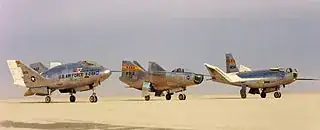
lifting bodies

Could a similar approach help to make trains more efficient?

Passenger trains already look streamlined and aerodynamic:
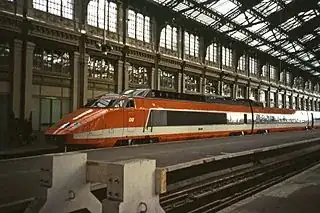
TGV

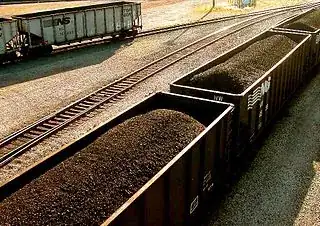
Freight trains do not:

freight train

Air resistance is not the only form of resistance that trains must overcome. They must also overcome the resistance of their wheels on the track. This is where I would think that the energy savings from a lifting body design would come from. Any additional lift created by the lifting body design would reduce the friction between the wheels and rail, thus saving energy.

Train wheels have flanges on them, so they don't need traction to steer. The cars also don't need traction on the rails since the driving wheels are only on the engines.

Could a lifting body create enough lift at typical train speeds to make a noticeable difference?

hazzey
  • 10,730
  • 11
  • 46
  • 96
  • 8
    You would still need friction in order to be able to break. As far as I know, thrust is "concentrated" in the locomotive(s), but breaking capability is distributed across all cars in the train. – Nick Alexeev Feb 26 '15 at 03:09
  • 4
    For a lifting body substantial enough to create a noticeable effect, I would think that derailment could be an issue. – HDE 226868 Feb 26 '15 at 03:48
  • For rail tankers & closed rail cars where access is from the sides, like boxcars possibly. For rail trucks that get loaded from the top for hauling loose dry items like agricultural grains, crushed rock, mineral concentrates from mines, then unlikely. You also have to consider how some of the rail trucks are going to be unloaded. Sometimes they can be decoupled from the train & individually turned upside down to empty the truck. Others can be unloaded by having their bottoms drop out over specially constructed pits. For cars carrying livestock which needs open sides, then no. – Fred Feb 26 '15 at 04:47
  • 1
    Note that "typical train speeds" varies hugely by train, track and cargo. Inclined curves call for greatly reduced speeds to prevent, e.g., spilling 20 thousand gallons of herbicide into a major waterway. I think quantifying those "typical speeds" is the first order of business as it may answer your question right off the bat. – Air Feb 26 '15 at 05:11
  • 1
    you typically don't want the train to lift off the track, often engineers will want to add downforce to avoid it – ratchet freak Feb 26 '15 at 08:42
  • 2
    Also, a number of modern passenger trains are electric multiple units, in which the driving wheels are spread throughout the train. Even with passenger trains, a lifting body is often a bad thing. – cpast Feb 26 '15 at 10:01
  • 1
    How would you go about shaping a train to provide lift? The forward facing area is tiny, and the width available for winglets is tiny. – Jon of All Trades Feb 26 '15 at 20:27
  • @JonofAllTrades That is a very valid question, but it is definitely a separate question. – hazzey Feb 26 '15 at 20:30
  • Who needs wings when you can use magnets? https://en.wikipedia.org/wiki/Maglev – JAB Oct 21 '16 at 20:31

5 Answers5

13

I won't say it's not possible to make a noticeable difference. But I would say that it's pretty darn unlikely.

The lift and drag forces on any body generally depend on the velocity of the body ($v$), the density of the fluid ($\rho$), the area of the object ($A$) and a dimensionless coefficient ($C_L$ or $C_D$). The applicable area can be a bit fuzzy in terms of whether you're talking about frontal area or planform area, but for a train this is going to basically be the area in the plane normal to the direction of travel (given that most of the train cars are simply in the wake of the locomotive). The coefficients can vary a bit with velocity due to turbulence, but will generally be between 0 and 2. The functional form is:

$$ F_L = 1/2\rho A C_L v^2$$

Crudely estimating a freight train as being $4\, m$ tall and wide, moving at $16 \, m/s$ ($57 \, kph$). This gives us that lift will be around $2500 N$ for the entire train (not enough to lift an ordinary automobile). This calculation is not meant to be extremely precise, but even it's off by a factor of ten, lift would be minimal compared to the overall weight of the vehicle.

Given that, you might consider the merits of adding additional aerodynamic elements. Here you get into a tradeoff between generating lift (to reduce downward force on the wheels) and generating drag. While lift-to-drag ratios can get high (~50 in good cases) the rolling resistance of train wheels is actually very low ($C_{rr} \sim 0.00035$). So although the lift will reduce the losses due to friction, it will increase the losses due to drag more.

So, reducing drag is good but providing lift is probably not worth it. In fact, reducing drag at the cost of adding some weight could be beneficial because wheels are so very good at bearing that load efficiently.

N.B. I consulted Wikipedia and engineering toolbox for $C_{rr}$ data. I could not verify sources for railroad wheels, but was able to confirm that values for road tires were correct via "Fundamentals of Vehicle Dynamics" by Gillespie. Any ideas on verification would be welcome.

Dan
  • 1,976
  • 1
  • 12
  • 17
10

You don't want to decrease the downward force on the wheels because that is your primary means of slowing down in an emergency. It already takes a while to stop a train, don't make it any longer. Remember that kinetic friction (wheels locked) is proportional to the downwards force on the wheel and the brakes are spread along to each car.

Train wheels have flanges on them, so they don't need traction to steer. The cars also don't need traction on the rails since the driving wheels are only on the engines.

They do need traction, wheels are slightly conical with the radius at the outside being larger than the inside and they are both coupled to the axle. This way when the train is off-center or in a turn the outside wheel has a larger effective radius thus will turn it back to the center of the track.

ratchet freak
  • 6,752
  • 21
  • 23
2

The friction, ie resistance to roll is mostly in the bearings the wheels run on and not the contact between wheel and rail. Actually very little if any friction in the forward direction is from the wheel to rail contact if the wheel is just a free running wheel. Of course if you drive or brake the wheel then the contact will provide friction as the torque is now greatly unequal.

1

The coefficient of rolling resistance for railway wheels on rails is around 0.0024.

A very efficient wing might have a lift to drag ratio of about 100. The inverse of this is 0.010, to get it in the same units as the rolling resistance.

Therefore overall this idea would increase the resistance to motion of the train, even with an impractically efficient wing.

Greg Locock
  • 1,147
  • 1
  • 4
  • 10
0

Any amount of aerodynamic lift causes an increase in drag. This is called "lift induced drag". This drag would reduce efficiency since extra energy would have to be expended to counter it. Thus, while shaping the train to reduce aerodynamic drag could be helpful, especially for fast trains, creating lift is counter productive.

Eric S
  • 915
  • 8
  • 16