3

So, in a car either a liquid or a gas gets compressed when force is applied to the suspension, and when the force is removed the gas/liquid tries to expand again which makes an effect like a spring,

But could you make the opposite, or does it already exist? so a pull creates a vacuum (or just lower pressure), when the pull is stopped the vacuum (or just lower pressure) will try and pull back, and work like a spring?

edit:

While waiting for answers i googled a bit, and what Ι could find was something called gas springs, but these only seem to be for dampening and only suspension? or can they also be used for pull and retract like a normal steεl spring?

Thanks in advance for information. (:

NMech
  • 24,340
  • 3
  • 38
  • 77

2 Answers2

2

The problems with the vacuum would be that

  1. the resulting force would always be less than 1bar times the cross-section.

In a typical dampener the pressure of the N2 (or compressed air) is a few bars, which results in a much more compact cross-section.

  1. It is difficult to maintain a vacuum

Even if you could create a vacuum, it is very difficult to maintain it. Therefore in the long run the vacuum would drop and it would drop the force.

If the liquid (which is typically used for dampening) does come into contact with the vacuum, then the vapors from the liquid would reduce the vacuum pressure very quickly (let alone the air molecules which are in the liquid that would almost immediately go to the vacuum).

double action hydraulic dampeners

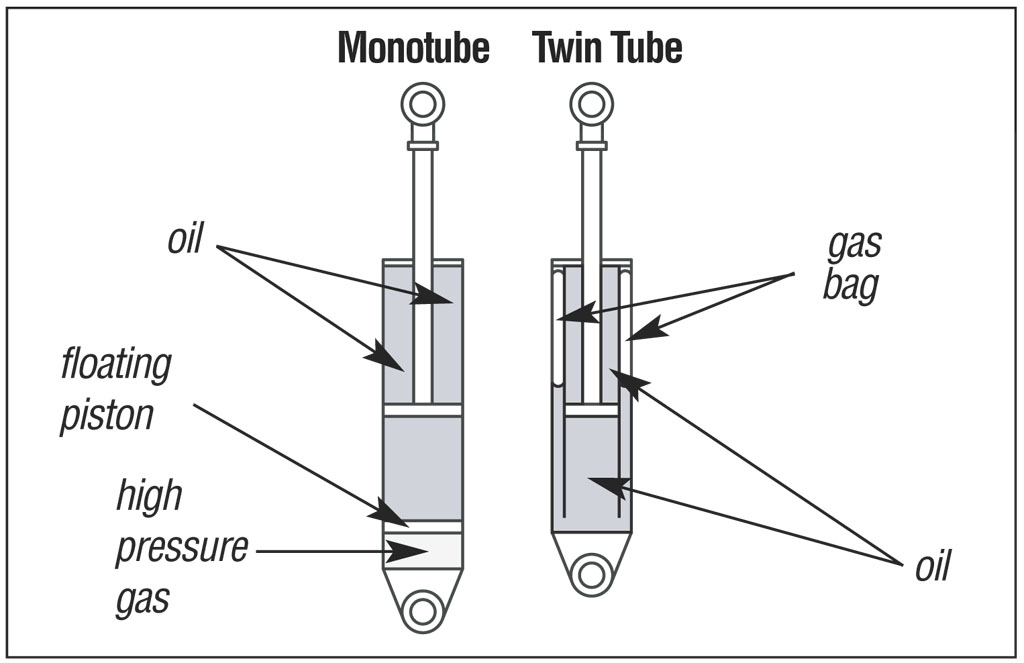
If I understood correctly, i think what you are after are double action hydraulic dampeners. They come (generally) in two flavors

  • Single tube.
  • Twin tube

enter image description here

Figure: Single and twin tube shock absorbers.(source: wikipedia)

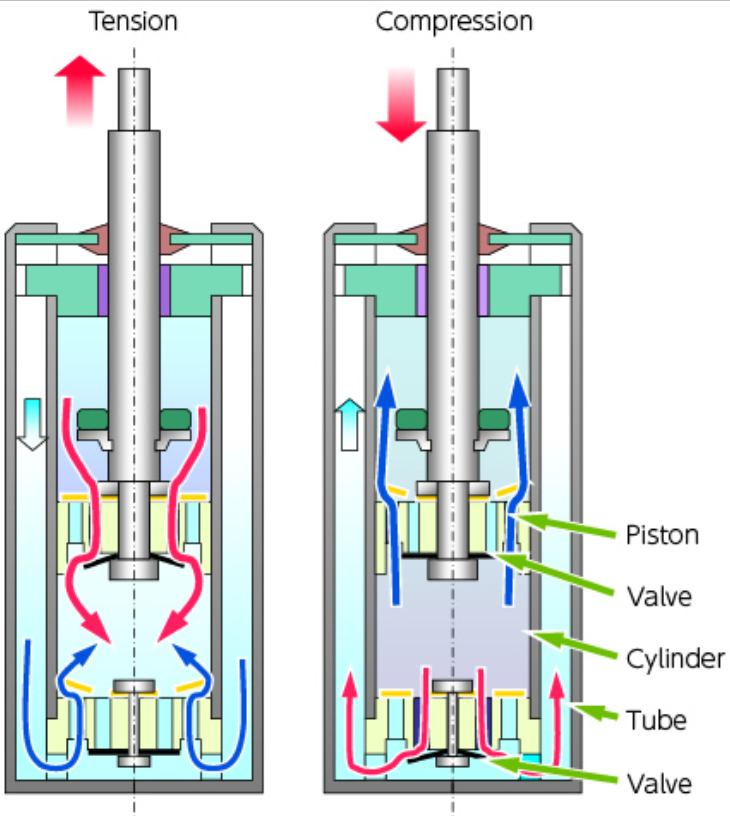
The working principle for tension and compression is shown in the following image:

enter image description here

Figure: Twin tube shock absorber (source: motorcyclespecs)

NMech
  • 24,340
  • 3
  • 38
  • 77
1

Most car suspensions are based on a spring - used to be flat cart type but now most cars have coil springs.

Some cars did go with a hydraulic suspension - early minis come to mind.

If you really mean the shock absorber, or damper, then they can be pressurized and tend to use oil.

Never seen a vacuum based system on trucks or cars but it might have been done - however, given how complicated it would be...

Edit: based on the addition, some things use high pressure nitrogen cylinders, or bags, to provide a spring-loaed action for hydraulic systems. One example is for hydraulic arms that need to move if they encounter an object but need to stay put otherwise. Some are over 400Bar so knowing what you are about to undo is crucial...

Solar Mike
  • 16,242
  • 1
  • 27
  • 33