1

I'm an intern at an electrical utility and I've been tasked with doing a proposal/cost analysis to evaluate whether or not starting a pilot with a company specializing in robotic inspections is worth it. The pilot, if it goes through, would consist of a tethered drone conducting an infrared/thermography scan and a LiDAR point-cloud (light detection and ranging) scan, in addition to a high-resolution RGB scan of the manhole, with permitting and de-watering as rather significant additional costs. The economics are not favorable, and there are some questionable aspects of the entire process, mainly

  1. The permitting, de-watering of the manhole, 4-gas monitor air sampling, and lid removal/re-installation is still necessary procedure for the process, even if a tethered drone as opposed to human personnel will make entry (thus an additional cost requiring two teams; the crew that removes the lid will still have to wait around for the drone inspection crew to finish, all the while still charging for the time spent doing nothing. The drone inspection company claims they have a solution to this by going to other manholes while one is being de-watered, but I don't know how this will actually work in practice.)
  2. Union arguments/conversations about a future where they aren't in the picture or something of the sort
  3. The fact that the data must be analyzed off-site, so a problem can't be remediated until the data is analyzed and then a return to the manhole structure is made.

What I'm wondering is: How effective is LiDAR in practice? Does it enable inspections to be done faster? If so, how much faster? I know that underground inspections are prone to human error and missed information, but there is some information on LiDAR effectiveness that I can't seem to find when looking at research. Say if one has a manhole structure where a vault exists. Resolution of photos and ability to see 2nd or 3rd cable deep on a rack in the back office is critical to evaluate defects – particularly cables with cracks and no active oil leak. I don't see how a tethered vehicle is going to be able to position itself to find these defects. It makes it even more difficult to give an honest analysis because I haven't ever been inside a manhole myself.

If anyone could speak towards their experience with IR/thermography and LiDAR point-cloud scan effectiveness in manhole structures, your advice will be greatly appreciated.

2 Answers2

3

There's nothing like kicking the dirt. I would advise actively participating in a manhole inspection, at least once so you know what it like. Do an inspection with an experienced person. By doing so you will have first hand experience of what is involved and what can and can't be easily seen or done via such inspections. Doing more such inspections would be better because there is always something missed & seen with each inspection. With more inspections you acquire more knowledge and experience. As a refresher do one inspection a year.

Scanning underground voids via laser technology is nothing new. It's been available to the mining industry for 15 to 20 years, though it is little used because of the cost and having to amend schedules and work practices. In some instances it has been used to scan a void and then project digital photographs onto the inside surface of the scanned shape so as to produce a 3D "walk/fly through" representation of the void.

Such images are good at presenting an overall representation of the surface of a void. They won't tell you if a cable is red or blue and a small leak from the rear of a cable of pipe can be missed because the image is taken from one perspective. With human inspection, a person can reposition themselves, safely, to get a better view of something that could otherwise be missed.

Because of the way the technology works, making a lot of laser shots, a lot of data is produced that can take time to process. This could be alleviated by using fast computers and efficient optimized software. Some software can be very sloppily written, which can result in longer processing times. I question why it couldn't be done on site. If laptop computers are not good enough, then a trailer or van with high specification workstations could be used.

If the manholes have cables, pipes or ladders in them, they can produce shadow effects by being an obstruction to the laser beams resulting in parts of the wall of the shaft not being picked up. Falling water, even as a consistent stream of drops, may also be problematic.

Fred
  • 9,782
  • 13
  • 36
  • 48
1

I don't think you want LIDAR. From what I have seen (and my experience is limitd), LIDAR, when it is referred to as LIDAR at least, is only accurate to a few cm. You aren't going to see cable defects with that.

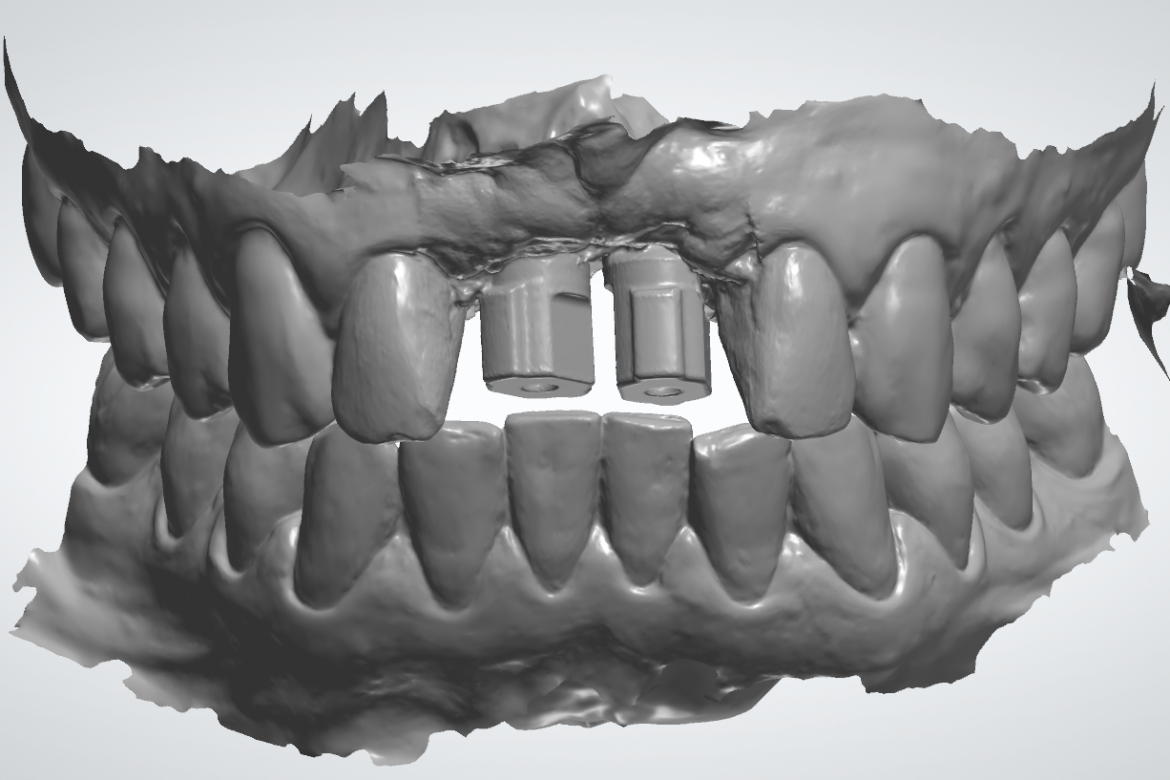
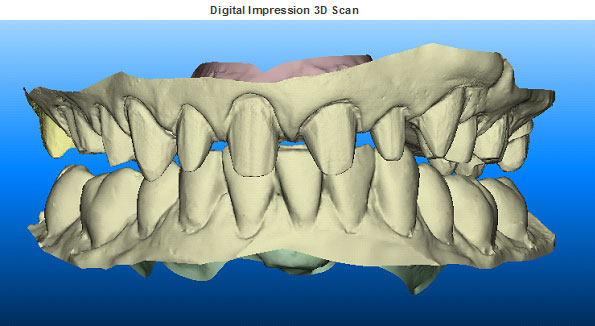
But instead of using putty to mold impressions of your teeth, orthodontists now use this handheld scanner. It has a rotating mirror in it and they run it up and down your teeth and software stitches the "images" together to make a 3D model of your mouth in the computer.

enter image description here https://www.kerenor.ca/blog/articles/digital-impressions/

enter image description here https://www.faceandsmile.ca/itero-digital-impressions

I have experienced several models and they all the ones I have seen have a rotating mirror and emit a red light. You have to get in close though.

They are called "virtual orthodontic impressions" or "digital teeth impressions". Something like that.

It's possible it might be using something in additional to time-of-flight, such as phase. They are really accurate but require dexterity to scanning around the target (if you experienced an orthodontic assistant scanning someone's mouth you would understand what I mean).

https://www.youtube.com/watch?v=0xcewGpzdPc

DKNguyen
  • 5,659
  • 1
  • 13
  • 23