2

So I'm watching the tower cranes at a construction site nearby everyday: They seem so tall and unstable that my naïve assumption would be that the counterweight would move back and forth to maintain balance as the load moves back and forth along the jib. After all we're talking about 20 tons moving 70 meters out from the central tower portion!

However, the counterweight appears to be fixed and only the load moves back and forth. Why is this and couldn't tower cranes hold significantly more weight if they had a moveable counterweight?

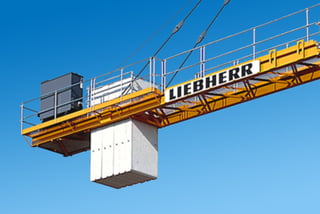
Tower crane image thanks to https://engineering.stackexchange.com/q/16118/39064

Counterweight image thanks to https://physics.stackexchange.com/a/427412/232868

SurpriseDog
  • 121
  • 4
  • If 20 tons is the maximum, then there is a lifting capacity chart, which means the crane can not lift 20 tons at maximum extension. Maybe 6-7tons. – StainlessSteelRat Aug 26 '22 at 19:48
  • "Why is this and couldn't tower cranes hold significantly more weight if they had a moveable counterweight?" That's insufficient. A moving counterweight would only reduce the torquing moment at the joint between the vertical and horizontal truss. It would not reduce the bending stress on the horizontal truss which would need to be beefed up. – DKNguyen Aug 26 '22 at 21:14
  • So in other words, with no load, and with the counter weight at maximum distance from the center, the CoG is still within the base ? – John Anderson Feb 19 '23 at 16:40

2 Answers2

2

There are some cranes that Counterweight moves on a buggy, not apparently in your case!

In this crane part of the stability of countering the load comes from the crane's vertical shaft which is capable of resisting a certain over-turning moment. And the counterweight adds to the maximum load still in the safe envelope!

While the hook is not lifting any load the crane shaft keeps the counterweight balanced!

kamran
  • 23,517
  • 2
  • 22
  • 42
0

It is for a simple reason - the lifting points vary throughout the lift operation (from point A to point B and returns to A). If only repetitive vertical lifts with a fixed lift point are needed (either fixed over point A or B), then moving the counterweight may be a better choice, but a single-point lift setup rarely is practical.

r13
  • 8,333
  • 3
  • 10
  • 29