1

The bicycle component manufacturer Shimano makes crankarms named "Hollowtech".

Hollowtech crankarms are meant to be both strong and light. As the diagram below (source: Shimano) shows, the outer shell is made from an aluminum alloy and the inside is hollow.
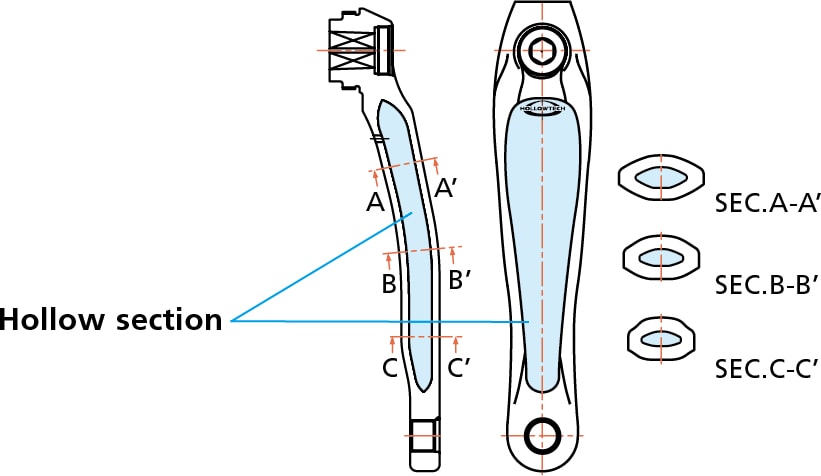
hollowtech

On closer look it turns out that the cross-section of the crankarm is not made from a box section, but from two C-sections. (Source: bikeradar)
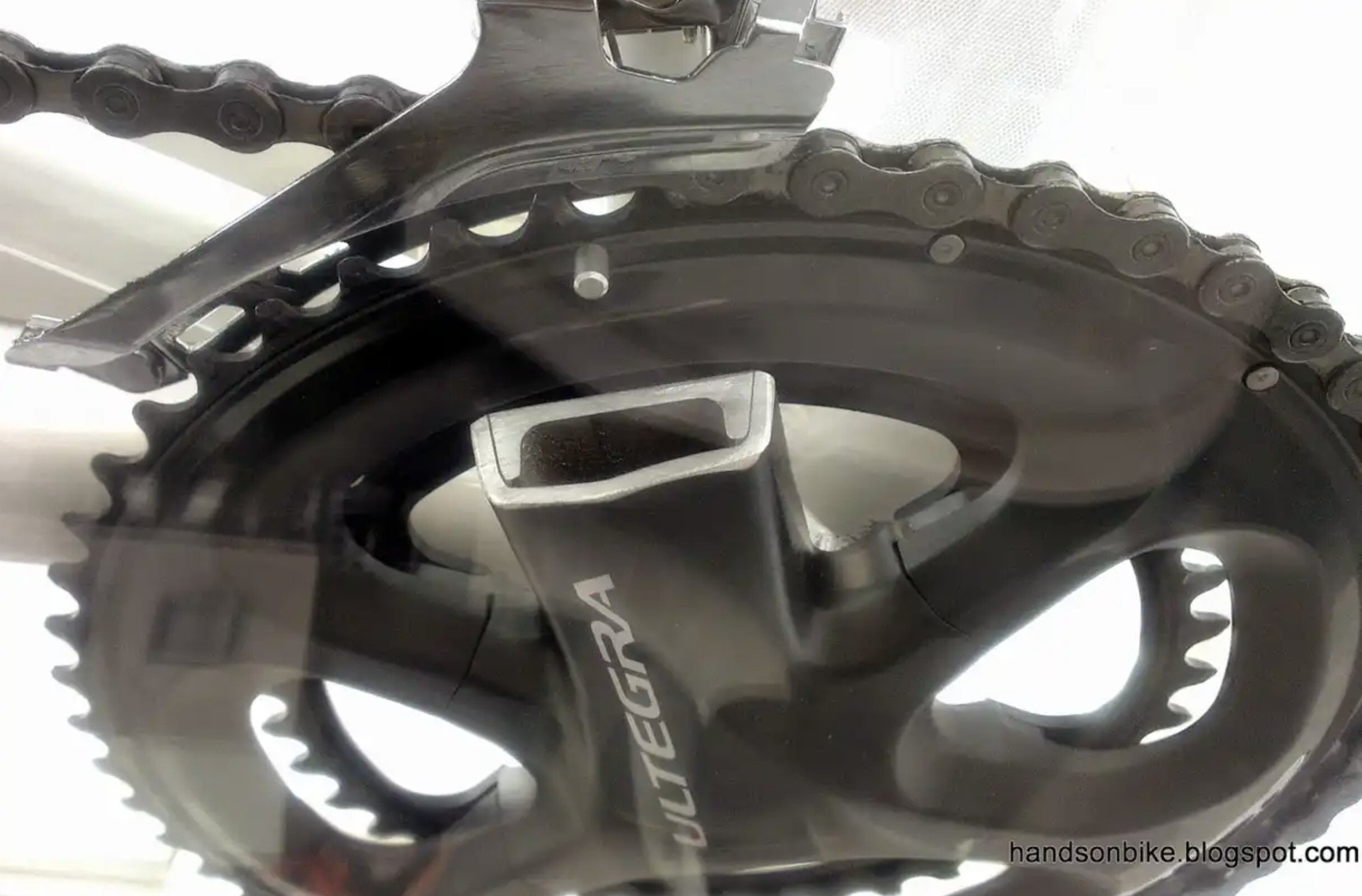
two c-sections

Another (older) style of Hollowtech consisted of a C-section closed off by a plate.
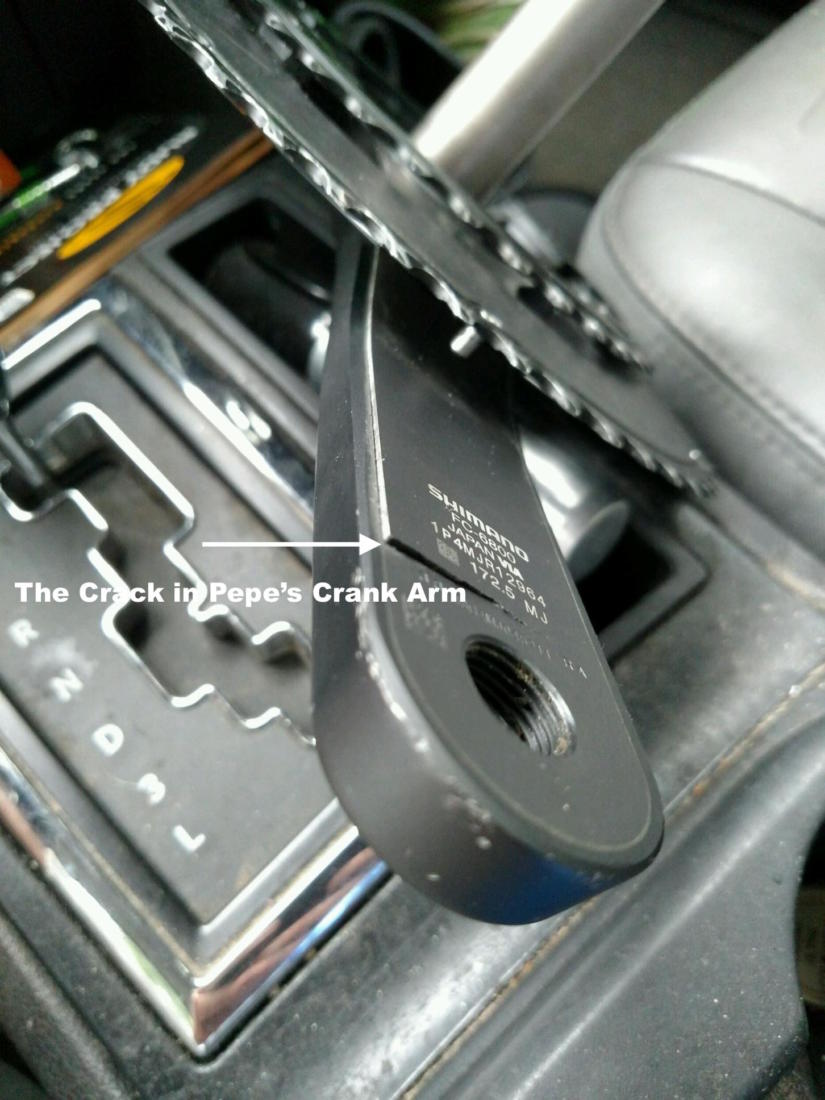
failure mode of hollowtech

The two parts are glued using epoxy. It's understood that epoxy, once it sets, is more than adequate for the task of carrying the weight of a cyclist on the crankarm, but even if epoxy does bind well with a (perhaps roughened) alloy, wouldn't the difference in the stress-strain curves of the two materials mean that when the alloy bends, it is the epoxy that will take all of the load? Since it's used here only as a binding agent, it would appear this is a recipe for failure. Do you understand how epoxy can reliably bind two parts of a crank arm, and can you explain it?

Sam7919
  • 471
  • 4
  • 11

2 Answers2

8

It does nothing for aerodynamics, the cavity makes the thing bigger and hence producing more drag (a very hypothetical reduction of Cd cannot change that). The point is simply the weight.

Perhaps it is also somewhat better to talk about stiffness rather than just strength (which may be an ambiguous term). You need the cranks to be as stiff as possible when doing sprints on high-end cranks.

Has the manufacturing process for R8000 series improved over R6800? Who knows, but the combination of two parts is still there and the failure is still possible. For example, https://yacf.co.uk/forum/index.php?topic=112701.0

2

Agree with Vladimir. Note that the join between the two C-section halves can be created with a deliberate interference (force) fit involving the roughened surfaces in such a way that when they are driven together in a press, the pieces gall and seize. This means the parts are in a sense friction-welded together and thus the epoxy does not have to carry all the imposed loads.

Another thing to consider is that if the interference fit creates residual compressive stresses in the assembly, then all you have to do to prevent the stress on the glue line from ever becoming tensile (which is how it would fail in service) is to ensure that the magnitude of the residual compressive stress exceeds the maximum tensile service stress.

niels nielsen
  • 15,513
  • 1
  • 15
  • 33