7

Often it's desirable to reduce the turbulence level in an internal flow without changing the Reynolds number or fluid. This could be measured by the turbulence intensity, though other measures might be better in different circumstances. I haven't seen a good compilation of these techniques, and I believe such a compilation could be very useful to engineers.

Below are the ways I'm aware of:

  • Flow straighteners reduce turbulence and swirl, but have an associated pressure drop. You can also get similar effects with meshes, porous media, and fibers.

  • It's commonly believed that turbulence transition begins in pipe flows at a Reynold numbers of about $2300$ in general, but laminar flows at far higher Reynolds numbers can be obtained with better quality experimental setups as discussed in this review paper on turbulence transition in pipe flows:

    Experimental evidence suggests that the laminar state can be achieved in pipe flows over a wide range of $Re$ with the record standing at $Re = 100,000$ by Pfenniger (1961). Reynolds himself managed to achieve $Re = 13,000$, and Ekman (1911) later improved on this to $∼50,000$ using Reynolds’ original apparatus. There have been many others (Barnes & Coker 1905, Draad et al. 1998, Gilbrech & Hale 1965, Goldstein 1965, Hof et al. 2003, Nishi et al. 2008, Paterson & Abernathy 1972, Schiller 1921, Wygnanski & Champagne 1973) who have achieved Hagen-Poiseuille flow over a wide range of $Re$ greater than 20,000, which is the upper value in Figure 2. Achieving laminar flows at high values of $Re$ is an indication of the quality of an experimental facility and gives some confidence that the observations will not be contaminated by extraneous background disturbances such as entrance flow effects, convection, and geometrical irregularities.

    From what I understand, in addition to the effects listed above, surface roughness and vibration can also trigger turbulence, so you can delay the development of turbulence with smoother surfaces and/or vibration damping in some cases. The standard transition criteria appears to be correct, but for systems that don't take special precautions to eliminate disturbances.

  • Relaminarization is when a turbulent flow becomes laminar, and is a stricter version of what I'm after. I'm interested in reducing the turbulence level. The flow could still remain turbulent, just less so. Here are a few ways to do this discussed by this review article:

    • dissipation of turbulence (could happen from enlargement in a pipe)
    • curved or rotating flows (could introduce swirl, though)
    • acceleration (could happen from a contraction in a pipe)
  • There are a number of papers on suppression of turbulence via sound emission or vibration. I don't know much about this, but I'm aware that it exists. If anyone knows more about this, or knows a good place to learn more, I'm interested.

If you can change the fluid entirely, that could be a good option to reduce turbulence by reducing the Reynolds number. There also are a variety of additives (mainly for water?) which can suppress turbulence (polymers, fibers, viscous liquids, etc.), but that's an entire other subject.

What other methods exist?

Ben Trettel
  • 996
  • 1
  • 5
  • 12

4 Answers4

2

I think you have a pretty comprehensive list. Some things could be more general such as flow straighteners could also include airfoils for correcting flow around obtuse geometry.

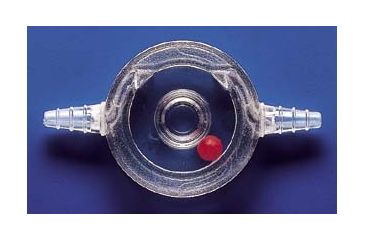
Other geometry which may fall under your scope can isolate turbulent areas of flow from laminar areas of flow. Like in a spinning ball flow indicator for example.

Here are the primary physical ways I see that turbulence is reduced. Some of your examples fall into more than one category, but I think looking at it from the physics side will make a lot more sense and give you the ability to derive more ways.

Turbulence reduction by:

  1. Changing the Reynolds number; fluid properties, velocity, scale.
  2. Changing the geometry; shallow diverging walls, airfoils, flow straighteners, flow isolators
  3. Eddy size reduction; vibration or dither for example could encourage small eddies to form instead of large eddies, airfoils, flow straighteners
  4. Dissipation of turbulence to heat (energy removal); flow straighteners, porous media, fibers or polymers suspended in the fluid.
ericnutsch
  • 8,305
  • 1
  • 16
  • 32
2

Dolphin skin seems to have properties that limit drag, also by reducing turbulence:

In the late 1950s the aerodynamicist Max Kramer claimed that a dolphin ensured a low level of friction drag by maintaining the laminar flow over most parts of its body. The dolphin’s skin having an unusually ordered inner structure was considered to be a natural compliant wall effectively reducing the flow disturbances in the boundary layer

(Pavlov: Dolphin skin as a natural anisotropic compliant wall)

As for explaining how and why that works, someone with more understanding of fluid dynamics than me has to read the paper. I'd suspect that some anisotropic properties in the skin mean that movement orthogonal to the flow gets absorbed, the energy dissipated. But that's pure conjecture at this point.

AndyT
  • 3,133
  • 14
  • 29
mart
  • 4,811
  • 2
  • 19
  • 32
1

Adding to these above ideas&techniques, In flexible pipes, along with the flexibility we can have filaments(flagellum ) on the walls. These could dissipate the turbulence kenetic energy for the same $Re$.

But we have to pay interms of pressure loss.

mustang
  • 511
  • 2
  • 7
0

Addressing laminar internal drag within a pipe; there is a new developing technology on the horizon called STIC; that utilizes methods to break up the straight line boundary layer drag and then providing a method to bleed portions of that turbulence into a separate chamber to be cooled and reintroduced back into the outer surface area. This process employs the "conservation of energy" principles to speed up the central flow; continuously bleeding the boundary layer drag and turbulence into a separate processing cavity. this new method does not require moving parts. recent testing in the Bakken Oil fields is able to triple the flow rate of oil with high levels of Hydrogen Sulfide. The new system originally designed to improve the liquid flow rates in various devices and applications. Utilizing this method of unloading oil tankers; the rate of the download was increased from 300 barrels per hour to +900 barrels per hour.