According to at least one source:
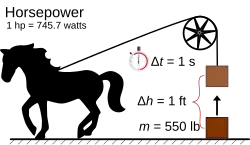
Image from linked site.
550 pounds lifted one foot in one second.
2000 pounds lifted one foot in one second means approximately four hp.
Fifteen seconds in the requirement returns the requirement to approximately one horsepower, requiring appropriate gearing. Four feet lift in the requirements returns the power needed to about four horsepower.
Four horsepower is approximately 2984 watts, within the specifications provided.
These are back-of-the-envelope calculations and may represent some rounding errors, but the numbers provide some leeway that prevent this from being a problem.
The drop and reset aspect of this scenario is going to be more challenging. A number of quick release mechanisms exist, but your automatic reset requirement is a sticking point.
A variation of the three-ring release is a suitable candidate for a release mechanism, but it has to be manually reset by a human. I created a mechanical version to allow a DJI UAS to activate a release simply by rotating the camera against the release. By using the three-ring-release concept, the activation force was 1/1000 of the weight applied to the release point, but it had to be manually reset after each use. Using appropriately strong components would provide for the same option in your project, but the reset remains a concern.
The lift period of fifteen seconds does not address the reset time period. One could envision an SBC managed set of links performing the latching reset in the proper sequence. This option would require also that the lift line (cable, rope or ?) return to the exact same location each time. This could be implemented with a funnel-type guide.
The above paragraph requires powered equipment placed on the payload, not referenced in your description.
Please consider to edit your post (not comment, per SE guidelines) to include more details and constraints, especially relative to the above content.
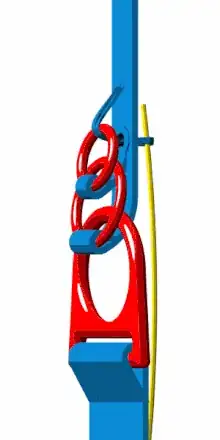 Image provided from SE linked post.


