0

i have to construct a subnet in cisco packet tracer using this ip that was supposedly given by the IPS:

79.48.0.0/16

But when i try to configurate the routing using RIP, and put for example 79.48.2.0 i get in the RIP network addresses 79.0.0.0 (255.0.0.0)

In normal cases, when using for example: 192.168.1.0 it appears correctly, so what it's going on? I'm using a 24 bit mask for 4 subnet

(79.48.0.0, 79.48.1.0, 79.48.2.0, 79.48.3.0)(all using this mask 255.255.255.0)

and a serial cable (10.0.0.0 255.0.0.0)

(here's a example)
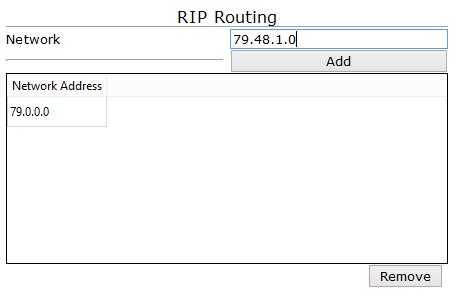
enter image description here

2 Answers2

3

This is correct, the reason why you are seeing this is because you are using RIPv1 which can only deal with classful addresses and does not support VLSM. The address range you are trying to configure is a Class A address which has a /8 (255.0.0.0) subnet mask and you can't use a /16 mask as it belongs to Class B addresses in a classful process.

If you want to use classless addresses and use VLSM so that you can divide your subnet into smaller bits, you need to change the RIP version to RIPv2.

To change this, you can do something like:

router rip

version 2

network 79.48.2.0

no auto-summary

We also turn off auto-summary so that it doesn't summarize the network into a classful network as you are seeing now.

Please also remember that RIPv1 is very old and you probably shouldn't be using it. If you must use RIP, make sure it is version 2 as it has many improvements over version 1, and using classless addresses is one of them :)

Hope this helps you on your quest.

SleepyMan

SleepyMan
  • 2,026
  • 11
  • 9
0

Unless, of course, he is being required to use RIP in a class or something.

Per subnetting and finding the right CIDR (/xx)...

In the 3rd octet for your four subnets, you only need the first two bits to express 0, 1, 2, 3. The value of those two bits is/are 128 + 64 --> 192, thus 10.48.192.0/18. This would leave you 6 bits of the 3rd octet and 8 in the 4th octet to address specific devices (a lot of them, 8K I think).