1

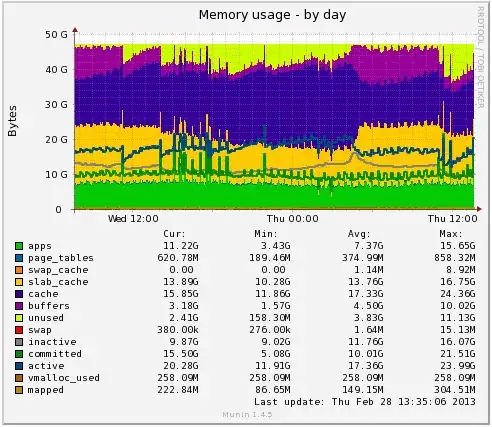
On our el6 servers there is a quantity of unused memory while on el5 servers there was no such problem. We need to get more aggressive caching on el6 as it used to be in el5.

Munin graphs on el6:
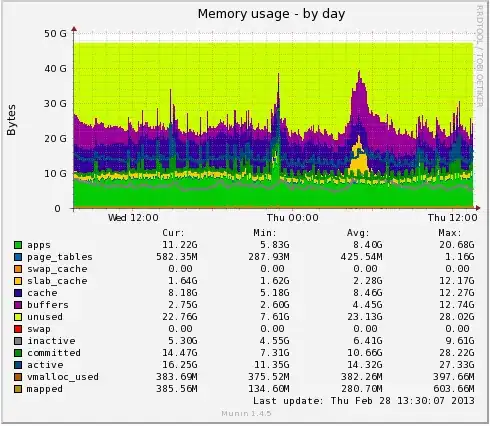
enter image description here


Munin graphs on el5:
http://i.imgur.com/eFfnheP.png

On el6 we try, but dont help:
vm.zone_reclaim_mode=0
vm.dirty_background_ratio=60
vm.dirty_ratio=80
vm.nr_pdflush_threads = 2
vm.min_free_kbytes = 19921
vm.swappiness = 5
vm.dirty_writeback_centisecs = 2250
vm.dirty_expire_centisecs = 2250
vm.vfs_cache_pressure = 1250

ewwhite
  • 201,205
Dmitriy
  • 11

2 Answers2

2

These are entirely different operating systems. So behavior on one doesn't necessarily mean the other will show the same characteristics. You have to consider:

  • Different kernel generations...
  • Substantial changes to schedulers.
  • Vastly different compiled-in defaults.
  • sysctl.conf settings are different.
  • Package/application config files are different...
  • Different default filesystems.

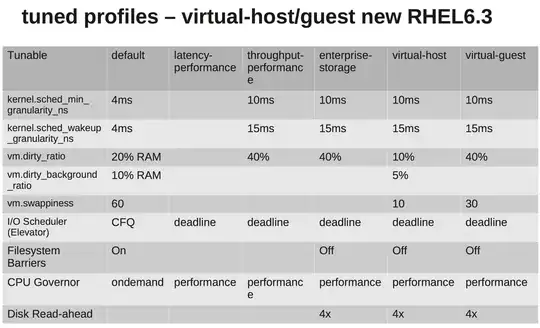
The first thing to know about tuning or building an EL6 system is to take advantage of the basic system profile tuning framework. The utility for this is called tuned-adm. Red Hat's documentation is here.

The basic overview of the profiles is:

This may help you eliminate duplicate work as you modify settings. What type of application is running on this system?

ewwhite
  • 201,205
0

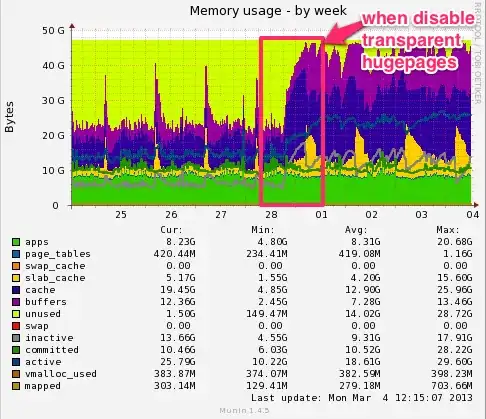
fixed:

echo never > /sys/kernel/mm/redhat_transparent_hugepage/enabled
echo never > /sys/kernel/mm/redhat_transparent_hugepage/defrag

after this:

https://i.sstatic.net/SxpUl.png

Michael Hampton
  • 252,907
Dmitriy
  • 11