Are there any particular incidents which are responsible for the low reputation Microsoft (and Bill Gates) has in the eyes of the open source community? Microsoft is clearly not the only proprietary company. Companies like Apple have done a lot worse when it comes to restrictions on software. Why does Microsoft get most of the hatred from the open source community?
Asked
Active
Viewed 2.0k times


19 Answers
58
I guess if there's any one "incident" then it was the so-called "Halloween Documents", which were a series of memoranda that were leaked by a Microsoft employee to Eric S. Raymond in the late 90's, detailing Microsoft's desire to "disrupt the progress of open source software."
It is worth mentioning a fact that highlights the aforementioned statement: that Microsoft often engages in negative (non-technical) campaign against its competitors. One of the greatest foul plays in Microsoft's history is paying someone to write a book claiming that Linux source code was stolen from Minix, in an attempt to make companies afraid to use Linux, so that it can sell its own products, in the basis that it was not legal to use stolen source code. Fortunatelly, Andrew Tanenbaum wrote an article to refute the accusation.
While not so intensively, Microsoft still engages itself in practices like that, as one can see from the recent claim (in 2007) that Linux infringes Microsoft patents (1 and 2) or the more recent (2012) "Droid rage feud" on Twitter. A link for the specific tweet can be found here.
While Microsoft's attitude has somewhat mellowed (compared to the past), many in the open source community still see Microsoft as a rather aggressive (and foul) competitor, particularly with respect to the negative campaigns and to the way they license their patented technologies (the "Open Specification Promise").
Now, whether that reputation is (still) justified is another question. Personally, I don't think Microsoft is as "evil" as some people would like you to think - certainly not compared to some other companies out there.

Rob
- 709

Dean Harding
- 19,911
47
As Dean pointed out, for historical reasons. However, I think Microsoft has been progressively heading the right way, take for example this:
Microsoft signs the Joomla! Contributor Agreement
http://www.microsoft.com/web/joomla/
Keep in mind that Microsoft, above all, is a business, and they will always look for profit in some form of another, however, I think they now know the value of community. Regarding being evil in open-source, I think Oracle is the new Microsoft, v.gr.:
Oracle sues Google, says Android infringes seven Java patents (plus unspecified copyrights)
I think what saves Microsoft is that their actual constant interest is to cover all of the market and this can lead to intelligent strategies, and Oracle's demise in open-source is plain interest in profit. Perhaps I'm being a little visceral against Oracle, so if anyone can prove me wrong, go ahead.

dukeofgaming
- 14,023
- 6
- 52
- 77
26
I am an active open source developer with commit access to several projects. I don't hate Microsoft. There are some things that I dislike about our industry as a whole, of which Microsoft is a part:
Patent litigation, I hate it when software is designed in court. I hate the concept of math I can't use. I can't stand companies that purchase hordes of patents with the clear intention of using them to get rich through litigation.
I don't like DRM. I don't like it pushed on me. I think the whole concept is stupid. I feel the same way about trusted computing. At some point, publishers and producers are going to have to wake up to the fact that their old business model is no longer tenable, and neither is constant litigation.
A corporation is legally bound to look after the welfare of its share holders first, above everything else. I feel that this sometimes puts companies in a position where they are legally obligated to do despicable things, once the potential profit of doing them is realized.
None of these gripes are at all exclusive to Microsoft. Yes, I read the Halloween documents when they leaked, but I wasn't really put off by them. I said then, just as I say now that a truly functional distributed development model is nearly impossible to disrupt. That has proven to be the case in most instances.
Technically, I am not fond of some of Microsoft's products. I suffered through EDLIN, laughed at BOB and avoided Vista at all costs. However, Windows 2000 is still (in my book) one of the hardest OS's to kill. I'm also becoming rather fond of Windows 7. I wouldn't purchase my own copy, but I'll happily use the copy that my company provided.
As others have said, I'm far more concerned regarding Oracle being Oracle than I am about Microsoft being Microsoft. At the time of this writing, Microsoft is at least predictable and they are trying to repair past damages to the free software community. Like others, I take those repairs with a grain of salt, but they do seem to show the capacity for metacognition, albeit on levels that many would consider trivial. Note again, publicly traded companies have an obligation to their share holders.
My decisions on what technology I use are based solely on technical merit. I'm not the only one who thinks that way. It just happens that, if I have the source code to something and can modify it to suit my needs, the merit increases exponentially. If I change it and can't share it, it is useless to me.
I'm also not completely immune to the idealism of free software, I really hope that one day, open collaboration prevails and we really start advancing ourselves free from litigation and secrets. I live in the real world, and I don't see that happening in the immediate future.
One can hope, and I do, and I work for change. Until then, I do have bills to pay :) I don't get paid for speeches.
17
Microsoft had something of an anti-competitive reputation before open source was ever an issue.
One example is one of the Office apps (Word, I think) which was claimed to include during startup an allocation of an unrealistically huge amount of memory which was then immediately freed without ever being used for anything. When asked to allocate a large block of memory, MS-DOS would always succeed initially irrespective of whether all that memory was actually available. Digital Researches DR-DOS would fail immediately if too much memory was requested. The effect was that the Office app worked just fine on MS-DOS, but crashed immediately on DR-DOS. The claim was that this was intentionally done to give the impression that DR-DOS was buggy, and to make using DR-DOS impractical for customers already dependent on Office.
The policy of allowing a memory allocation even though the memory isn't immediately available isn't so wierd as it sounds. Linux does the same thing even now. That policy often allows things to run without problem that would otherwise have a problem, though very occasionally the policy backfires and the Linux kernel has to start killing off processes to free memory as a result. The reason I point this out is because, for all I know, there may have been some weird but genuine reason for the large allocation at the start. It sounds implausible, but so does the policy of allowing allocations when the memory isn't immediately available.
For that matter, the whole thing might even be a myth. Certainly some well known ex-Microsoft employees have published blog posts describing the extreme measures that Microsoft used to (and maybe still does) go to to ensure that old applications, including third party apps, continue to run on later DOS and Windows versions - though that is a slightly different thing, of course.
17
Well some time ago (like 5-6 years AFAIR) they tried to make linux illegal by throwing money at SCO company lawsuit. They were sending legal threats and trying to sue linux users, pretending to own it. It took like 2 years, before they finally acknowledge they were unable to point any "stolen" code, so they switch to a nice thing called software patents and then they said their "intellectual property" was stolen.
As you may know Intellectual Property is some bullshit, not a real thing, so it's easy to say someone stole it from you... when you don't even know what it is. "I use red backgrounds for my desktop - you stole my intellectual property".
SCO's reputation get so bad that they went bankrupt and i guess this one, beside many others is enough to hate microsoft for financially backing up this bullshit to undercut linux reputation.
We can add some mentally retarded Ballmer's quotes to the equation:
-- "Open Source is a cancer"
-- "Open Sourse is not free, finally patent owners will come and you'll have to pay the bill"
-- "Open Source is communism" (I think that was Bill Gates)
But, in the end MS is 100x more friendlier than eg. Apple. Apple made it illegal for their programmers to use tools that they want (eg. cross compilers or flash)... treat to destroy any free video codec (because they own all Intellectual Property, bla bla bla)... so at least MS is sane in this matter (not treating their programmers and users like slaves).
We should really hate Apple, microsoft get much nicer over time. Now Apple is trying to delegalize owning a brain.
To end with optimism. It's good that we, in European Union don't have any sortware patent or intellectual property bullshit going on. So apple can for now go f** themselves... and harass United States people only. Even the Terms Of Service (TOS) agreement for private end-users was ruled illegal by the German court (and several other countries ruling followed), so in EU it means just NOTHING. How good is that? :)

Slawek
- 2,892
12
As Paulo Scardine has pointed out, Gates started off hostile to the hobby computing community, and it isn't clear that he ever changed that.
Microsoft has used aggressive and frequently illegal business tactics to get to its position, and sells primarily to businesses rather than individuals. Microsoft is currently a monopoly in the OS and office software field, and it's difficult to get a computer without some money going to Microsoft. This is exactly the sort of thing that got a lot of people hating IBM back when they were in a similar position.
The 1998 Halloween documents showed Microsoft as actively hostile to the Free Software/Open Source community.
Microsoft is generally believed (I haven't checked it out myself) to be the financial driver behind the SCO lawsuit that attempted to destroy Linux. The lawsuit was ill-advised (SCO didn't even own the copyrights they claimed they were trying to enforce) and destroyed the company, but that didn't seem to stop anybody.
Microsoft was behind the OOXML standardization scandal, which destroyed a lot of confidence in the ISO and interfered with their ability to get things done. (This involved Microsoft fast-tracking a bad standard by having MS partners step into the standardization process to push specifically for OOXML standardization, ignoring objections, and leaving standards bodies without a quorum when the MS partners left.)
Microsoft has alleged, many times, that Linux violated MS patents, without ever saying which patents or in fact supplying evidence. This was viewed by lots of people as an effort to cast FUD over Linux, making MS look like the safe legal choice through innuendo.
The SCO lawsuit, OOXML standardization, and patent rumbles are all in the past several years.
Therefore, Microsoft's got a strong history of being the enemy, including fairly recent actions. The Free Software/Open Source community has a collective memory, so it will take a long time and a lot of work for Microsoft to lose its bad reputation.

David Thornley
- 20,310
9
Kids, sit down, uncle Paulo has a nice history for you.
Bill Gates was one of the first business man to advocate selling software by itself. Before him, software was mostly something bundled with hardware. He started the damn software as a product industry.
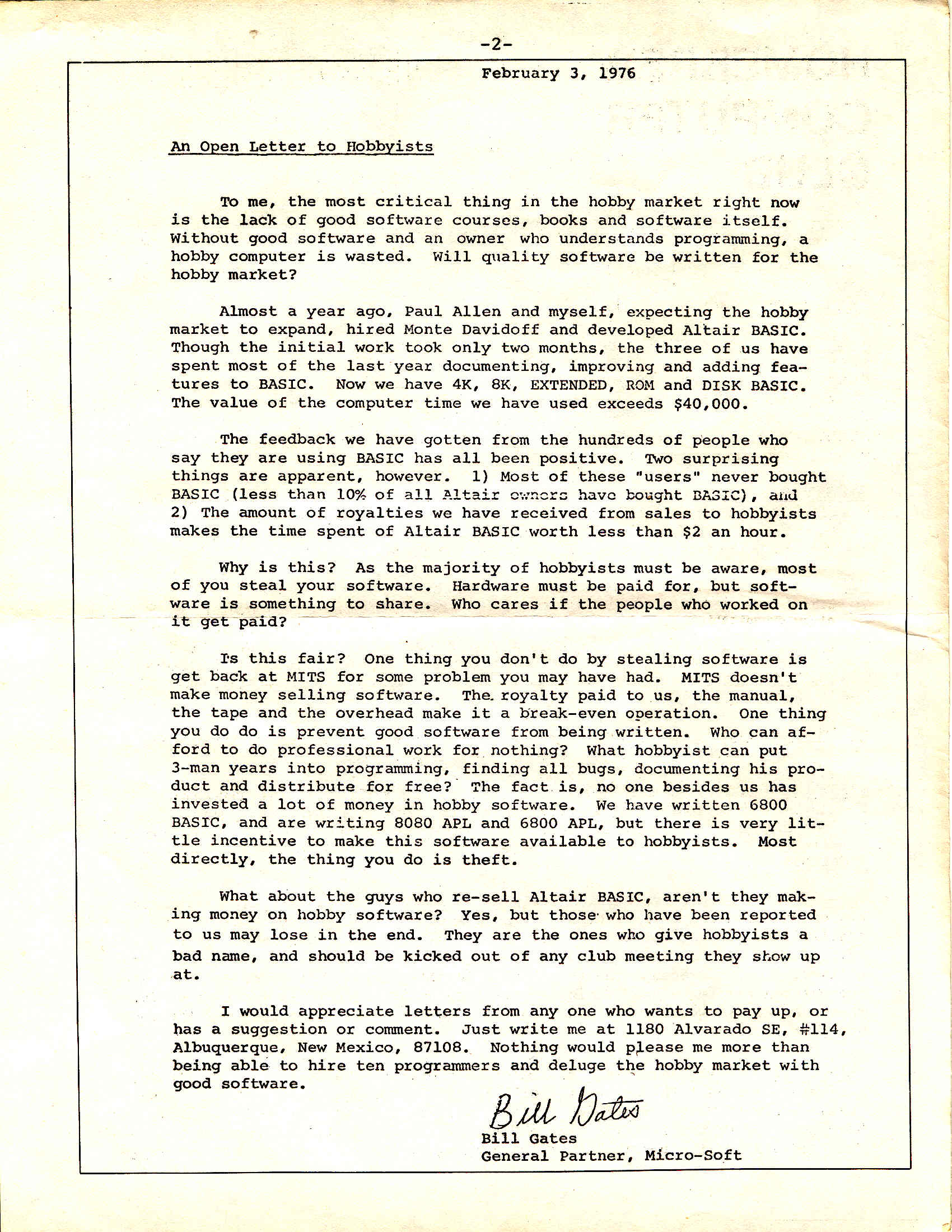
The infamous 'AN OPEN LETTER TO HOBBYISTS - By William Henry Gates III' dates back to 1976!!! A young (just 20) Bill Gates wrote this letter to the legendary Homebrew Computer Club complaining that Altair BASIC was being rampantly copied.
The feedback we have gotten from the hundreds of people who say they are using BASIC has all been positive. Two surprising things are apparent, however, 1) Most of these “users” never bought BASIC (less than 10% of all Altair owners have bought BASIC), and 2) The amount of royalties we have received from sales to hobbyists makes the time spent on Altair BASIC worth less than $2 an hour.
Why is this? As the majority of hobbyists must be aware, most of you steal your software.
And, towards the end:
Most directly, the thing you do is theft.
So the thing remounts away back before Microsoft became known for playing hardball business. Before the software industry, software was free, something bundled with hardware to make it useful. It came with sources and hardware maker was happy when you fixed or improved programs.
It's why old farts like RMS (and myself) despise this guy - BTW it's why we have the whole free software moviment.

Paulo Scardine
- 448
9
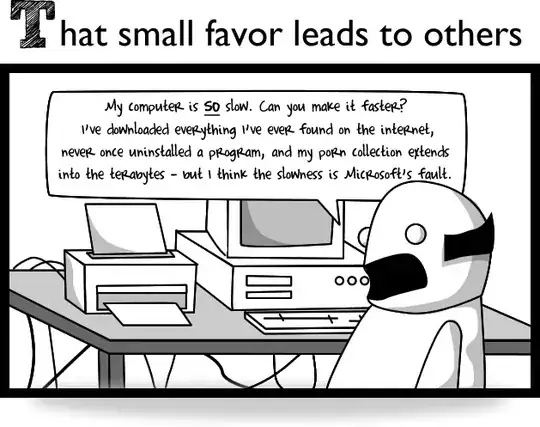
( http://theoatmeal.com/comics/computers )
What really got the ball rolling was the Netscape vs. Microsoft stuff, which included accusations that Microsoft deliberately broke Win98 in a way that caused Netscape to crash.
This accusation turned out to be false -- it was the result of Apple QuickTime not following Netscape's plugin development guidelines. The judge rejected that evidence (most likely because she didn't understand it), and it quickly became popular for governments and organizations to sue Microsoft over silly crap, with the EU following suit insisting that Microsoft killed Real Media with Windows Media Player.
Of course, then Netscape went open source and was forked under the name Mozilla and then Firefox, so the hate swelled within the open source community from there too. All of Mozilla's campaigning didn't help either.
The worst part of all this scapegoating and witch hunting is that it's letting people be incredibly irresponsible, like when people decided to blame half a million SQL injection attacks on SQL Server, rather than admitting that that particular class of bugs is entirely the fault of the database user.
I'm quite critical of Microsoft myself, but I'm even more critical of the people who think that they can get away with anything if they just blame Microsoft.
Also, Microsoft's particularly hated in the open source community because some people -- including Ballmer -- have instilled a false dichotomy between Microsoft and free/Free software.


Rei Miyasaka
- 4,551
8
The main cause of dislike for me toward Microsoft is (was) the disdain shown towards open standards.
I think the prime example that comes to mind regarding this issue is Internet Explorer 6. IE6 is so buggy it rapidly becomes a true nightmare to develop websites catering to it. Not having clear, common standards that every party (in this case, browser companies) agree upon only slows down end users work (webdevs), and, in a broader sense, progress as a whole.
Microsoft is making amends and trying to do "good" with IE9, we just have to wait for IE 6, 7 and 8 to slowly die.
For a long long time it was also close to impossible to read a .doc file in anything but Word, preventing users from switching text editors if they wanted to do so.
Bad communication regarding Outlook 2010 also started an uproar on twitter, see here : http://fixoutlook.org/
I think Microsoft has covered a lot of ground towards being more "open" and more standards-friendly, which is a good thing. I predict the "new ennemy" will soon be Apple :)
I don't think of Microsoft as evil, now they're more clumsy and under a lot of pressure, trying to do as best they can to please both devs and users, which isn't always easy.

François Cassin
- 161
5
Disclaimer: I'm not sure about this answer, I tried to stay objective and point out some of the flaws and problems, not rant about Microsoft. Maybe I failed at that, if I did so, I'm sorry.
I think one part for this is the fact that Microsoft has a virtual-monopoly on the Operating System market, and is partially aggressively defending it (Get The Facts, anyone?). Which is absolutely valid, it's a company which needs to make money, the problem with monopolies and virtual-monopolies is that it is good for the company, but not for the market and especially not good for the customers.
We don't have a really free OS-Market at the moment. Sure, the situation has improved a lot over the last years, but there are still many issues out there. F.e. the fact that Windows/Office comes bundled with most PC systems, without the option to get a OS free system (or a completely different OS pre-installed or at least installation medium). Or that most schools are teaching kids that Windows is pseudonymous with PC and Microsoft Office is everything you'll ever need (which is the bigger issue in my eyes).
The next problem is that Microsoft can't really be open and compatible to the rest of the world, because it would destroy their business model. Windows is a closed platform, the moment everything is compatible and open, that's the moment you don't need Windows. F.e. the Office Open XML Standard, which has so many flaws in it and in the standardization process that many call it a violation of the ISO.
In the end, Microsoft is a capitalistic company with a virtual-monopoly, that's absolutely valid...but that doesn't mean that it's good for us. And many people think that way, especially if they've seen other possibilities.

Bobby
- 253
3
When talking about Microsoft to people who don't know too much about IT, I notice that they wrongly think that:
- Microsoft is a strong concurrent to Open Source, whereas other companies are not, or not so strong,
- Microsoft forces everyone to use Windows despite Open Source solutions by installing its operating system on every computer sold,
- Microsoft does not encourage neither Open Source, nor free products.
After all, most people don't bother to know what are the restrictions of Microsoft vs. Apple or other companies software: for them, they are all proprietary, so restrictive in the sense that you cannot download or share the software product legally.
Most people also doesn't know that Microsoft is strongly involved in Open Source products and, even more, in free products, which have a less restrictive license than most Open Source ones (for those people, it's a good idea to invite them to visit CodePlex).
Finally, I think that criticism against Microsoft is stronger than against other companies just because of the dominant position of Microsoft. Probably people using Apple products will have the same arguments against Apple when talking about Open Source.

Arseni Mourzenko
- 137,583
3
It has historical reasons. Microsoft was earlier very active against (and sometimes in an unfair way) against concurrents. That also includes Open Source. Halloween-documents are an example. Microsoft also had an agressive campaigning against OSS. That included also some patent-claims, that lead to the contract between Novell (Suse) and Microsoft. That contract made Microsoft in the end to one of the biggest Linux-distributors.
Recently Microsoft has changed it's strategy. The firm no longer agitates against OSS. It even produces some Open-Source-software. Apples and Oracles doings in the recent past, make them currently much more 'evil' than Microsoft. But some people are conservative, that also includes their choosen enemies.
I would add, that Microsoft had been building it's bad reputation not only with the OSS-folk. OS/2-lovers, Netscape-users or Java-programmers all have also reason to hate Microsoft.

Mnementh
- 1,565
3
The primary reason is because big business is notorious for patenting everything they can and locking others out of the industry. If I invented something, I'd want to profit from it too, but big business takes it a different level, attempting to patent generic ideas and trademark generic words. This is called economic rent seeking. It's a very corrupt practice which congress has not had luck in stopping. It is counter-innovative. Open source people tend to have innovation in their mind more so than money.
Keep in mind, SO is closed source, and profit based. The difference is that they create things of value and ask for little in return (ad revenue). There are even clones of SO out there (for Django, PHP, etc), but SO doesn't sue their creators. Microsoft and Apple sue the competition out of business and charge a killing for their products, while providing little more than an expensive marketing message in return.

orokusaki
- 1,093
3
I can't speak specifically to open source, but I do know that at least for a while Microsoft made cross-platform programming more difficult than necessary. I spent a good chunk of the '90s writing code that had to run on multiple platforms (various flavors of Unix, Linux, Windows, and occasionally MacOS), and it always seemed like Windows was the long pole in the tent. Microsoft made it relatively easy to develop for Windows, but if you wanted your code to build on any other platform you had to jump through a number of hoops. By comparison, classic MacOS didn't throw anywhere near the number of hurdles in your way that Windows did, although working with MPW would occasionally make you question your career choice.

John Bode
- 11,004
- 1
- 33
- 44
3
This isn't the main reason, but it doesn't help: Microsoft has been accused of astroturfing. I've never seen it proven, but I used to lurk on Linux forums, and every so often I would see posts claiming Linux crashes regularly and is hard to maintain. The posts would come from people claiming to be seasoned computing professionals, but there would always be something very basic that they didn't know, or they would say something indicating that their knowledge of Linux was years behind the times.
I reserve judgement as to whether Microsoft was or was not behind the posts, but as I say above, I'm sure the accusation didn't help matters.

Larry Coleman
- 6,111
2
I was an almost exclusive user of and developer for Microsoft platforms until Microsoft joined the Trusted Computing Group and basically started to show that I, the person who bought their products, wasn't who they were concerned about pleasing; that instead they'd please media companies, et al, at my expense. I switched away from my MSDN Enterprise subscription (paid a pretty penny for that!), stopped using Microsoft products one at a time, beginning with Windows, as I found F/OSS alternatives until nowadays my computer is 99.44% uncontaminated with anything Microsoft.
I can't speak for open source developers (because I barely qualify as one), but I can say that for my own choice I made it because I got tired of Microsoft taking my money with one hand and taking away my ability to use the computer I paid for with the other.
I'm not a committed F/OSSer. I don't buy into the rabid versions of F/OSS philosophy (or, rather, attitude) so I'll use commercial software provided the following criteria are met:
- There is no viable F/OSS alternative.
- I can afford it (obviously!).
- It is not made by Microsoft.

JUST MY correct OPINION
- 4,002
1
One more reason:
(I think it's not mentioned in the many existing answers yet - correct me if it is and I over-read it)
Microsoft has a history of picking existing and successful open source projects, creating a closed-source clone of it, and integrating it into Visual Studio.
Some examples:
- Build tool: NAnt --> MSBuild
- Unit testing tool: NUnit --> MSTest
- OR Mapper: NHibernate --> Entity Framework
(yes, EF is open source now, but it wasn't when they first released it)
Mostly the Microsoft-made alternatives were seen as inferior by the community - at least by the community of the tool they cloned, and sometimes even by the whole .NET community.
And some generated a lot of heat - think about the Entity Framework Vote of No Confidence.
In the meantime, they partly changed their minds and did things like officially shipping jQuery with Visual Studio. Today we are used to this, but in 2008 that was a radical change.
But after that, they still created tools that did the same as already existing OSS projects, for example:
- ServiceStack --> ASP.NET Web API
- OpenWrap --> NuGet
...which probably causes a lot of people involved with open source to still hate Microsoft.

Christian Specht
- 1,863
0
It isn't that people or for the question's sake, geeks, hate Microsoft. When people turn towards open source, initially there is always the open source sentiment in mind. In those sentiments, they just get carried away with all the evil-doings of Microsoft in their past and end-up hating it. But, with time and work, they again realise that it wasn't exactly their not-involved nature, it was more about their inclination in their initial phase. I too started to hate MS in the beginning of my inclination towards open-source but with time, it just faded away.

Harsh
- 176
-2
Everyone needs an enemy in order to motivate the troops. We have always been at war with Eurasia.
Certainly, Microsoft hasn't been a saint. However, only half of what is ascribed to them is really valid criticism, most of it is simply hyperbole, conspiracy, and sensationalism.
I've seen mention of OOXML in this thread, and frankly that is the worst possible example because the anti-OOXML campaign was orchestrated by Sun and IBM for their own commercial interests. People like Rob Weir played the Open Source Advocates like a banjo, wrapping their commercial interests in the flag of "openness". Almost everything they accused OOXML of was equally applicable (or more so) to the community trumpted ODF spec, and the ODF spec was seriously deficient in many areas. All the complaints about "ballot stuffing" could be equal leveled at IBM (who actually wrote several of the responses by supposedly government groups).
Whether or not you think OOXML was a good spec is irrelevant. Far worse specs go through standards bodies all the time, without nary a peep.. but because this was microsoft, it was somehow the end of the world as we know it. I mean, seriously.. who cares if OOXML is made an ISO standard? Really? There is no law that because it's a standard, you have to support it. There are tons of standards that nobody supports, even in the open source community.
The whole mess was stupid, and the blame does not rest on MS's shoulders for submitting a sub-par standard, it lies on the Open Source advocates shoulders for making a gigantic mess over something that really had no bearing on those that wouldn't implement it anyways.
As evidence, now that OOXML has passed... who cares? Almost nobody. You seldom hear anyone say anything about it, not even Rob Weir. It's simply a non-issue.

Erik Funkenbusch
- 2,778